Estate Spices | Single-Estate Black Pepper, Cardamom & Canopy Honey, Yercaud
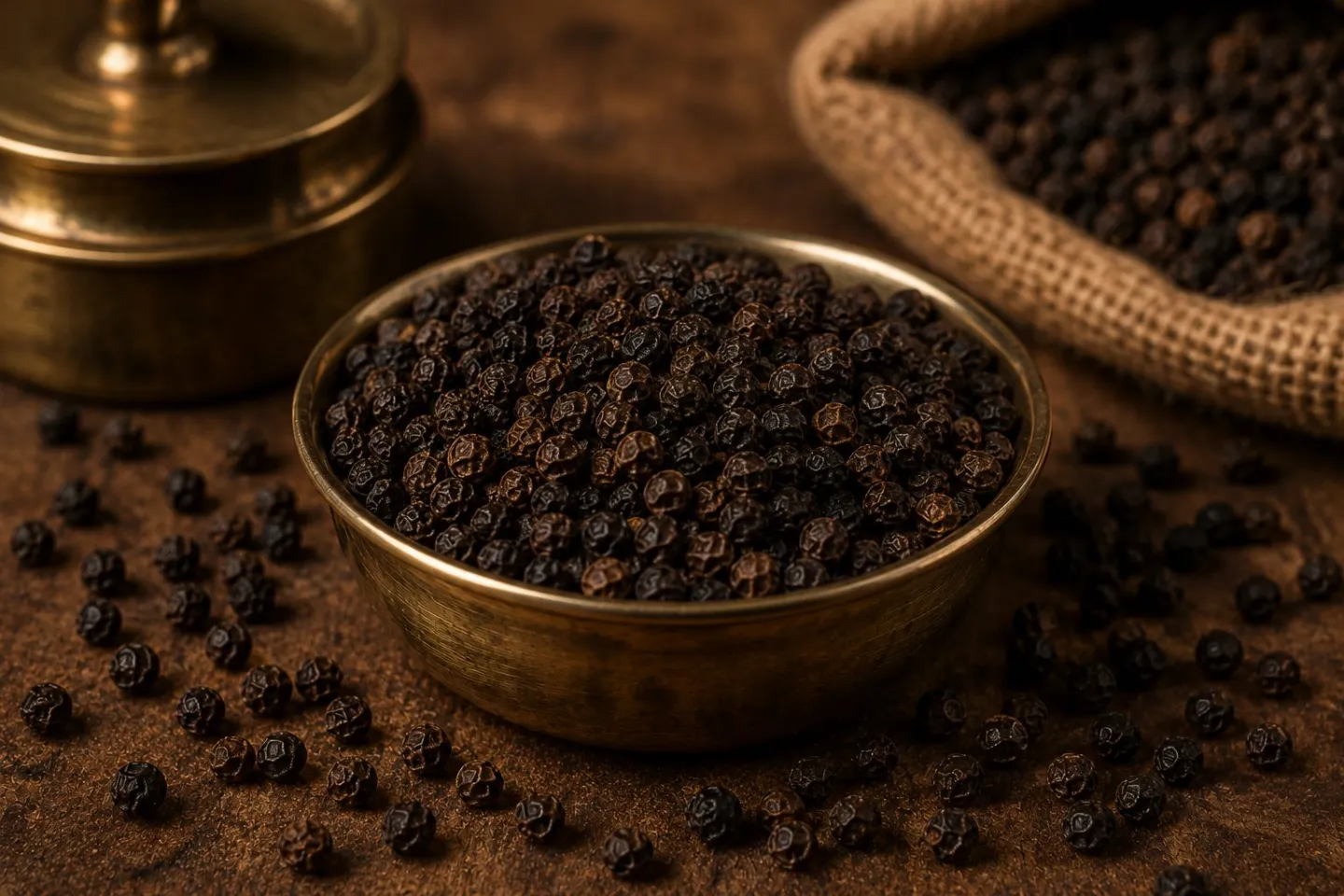
Sun-dried estate black peppercorns heaped in a brass bowl beside a jute sack

What we grow · 02 of 02

Estate Spices from the same canopy.

Black pepper overhead, cardamom at the knee, and hives in the shade between them. Three harvests, three different windows, and a slope that is rarely between seasons — so there is almost always something coming off this hill and into a sack.

Intercropped, not rotated

Sun-dried on the yard

Hand-garbled

3 harvests

What the range is

Cliff’s Estate Spices are black pepper, green cardamom and unheated canopy honey, grown on the same 1,200 acres as the coffee, in the Shevaroy Hills above Yercaud. Each is picked, cured, dried and graded on the estate — a single-estate spice range, which almost no national Indian brand can claim.

Intercropping · why we do it

One acre, asked to carry four harvests.

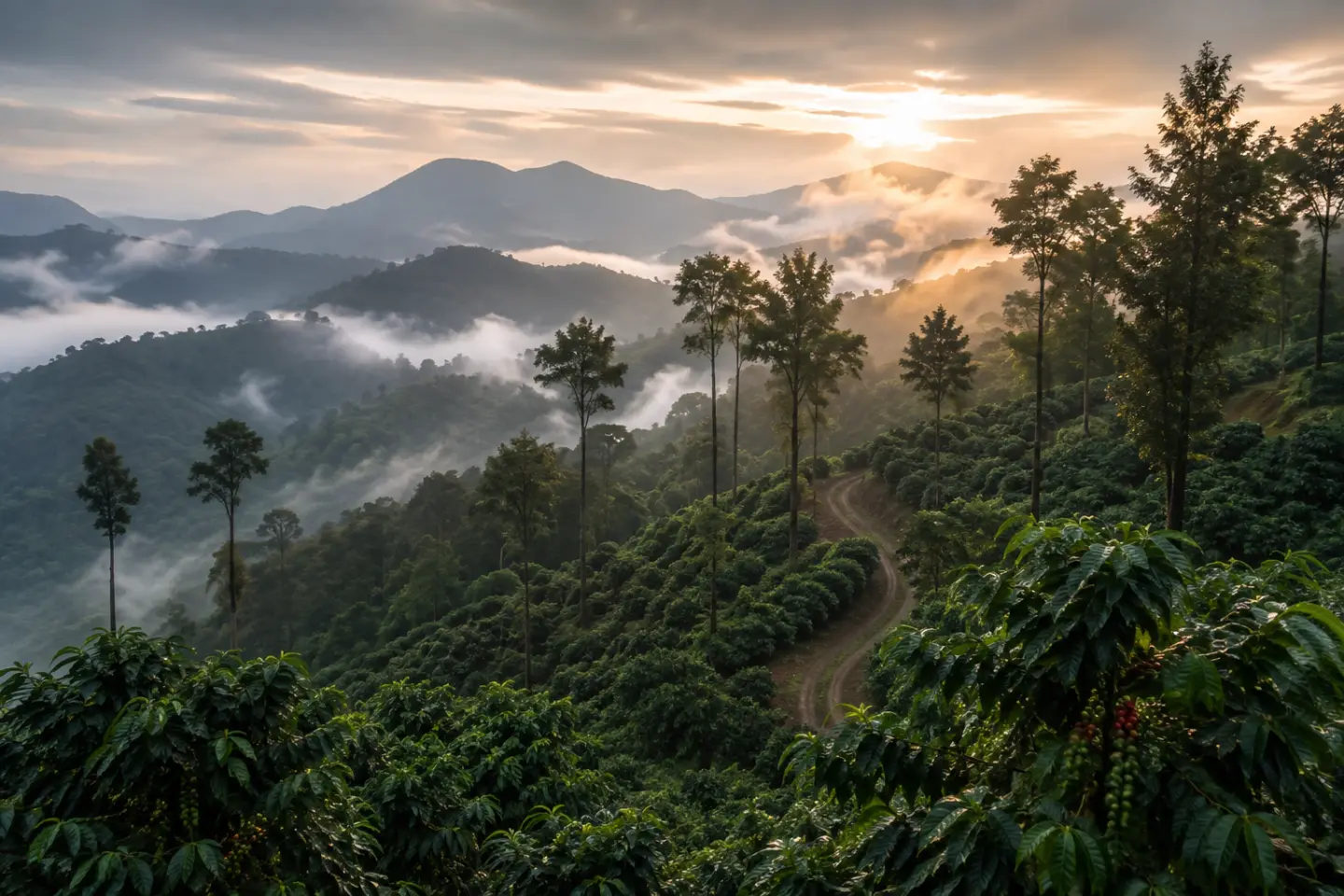
A monocrop field grows one thing and leaves the soil to fend for itself between rows. Our slope is built in layers instead: silver oak overhead holding the shade, pepper vines climbing those trunks, coffee at chest height, and cardamom filling the dark floor between. Litter falls year-round, roots hold the hill through four months of monsoon, and one acre carries four harvests instead of one.

It is slower and it is harder to mechanise. It is also the reason the pepper and the coffee taste of the same place.

Cross-section of the estate canopy: silver oak shade trees carrying pepper vines, coffee bushes beneath, and cardamom on the shaded floor SILVER OAK PEPPER COFFEE CARDAMOM SOIL the shade storey on the trunk 100% arabica the shaded floor litter, roots, water ~4,500 ft · Shevaroy ridge

Crop 01 · Piper nigrum

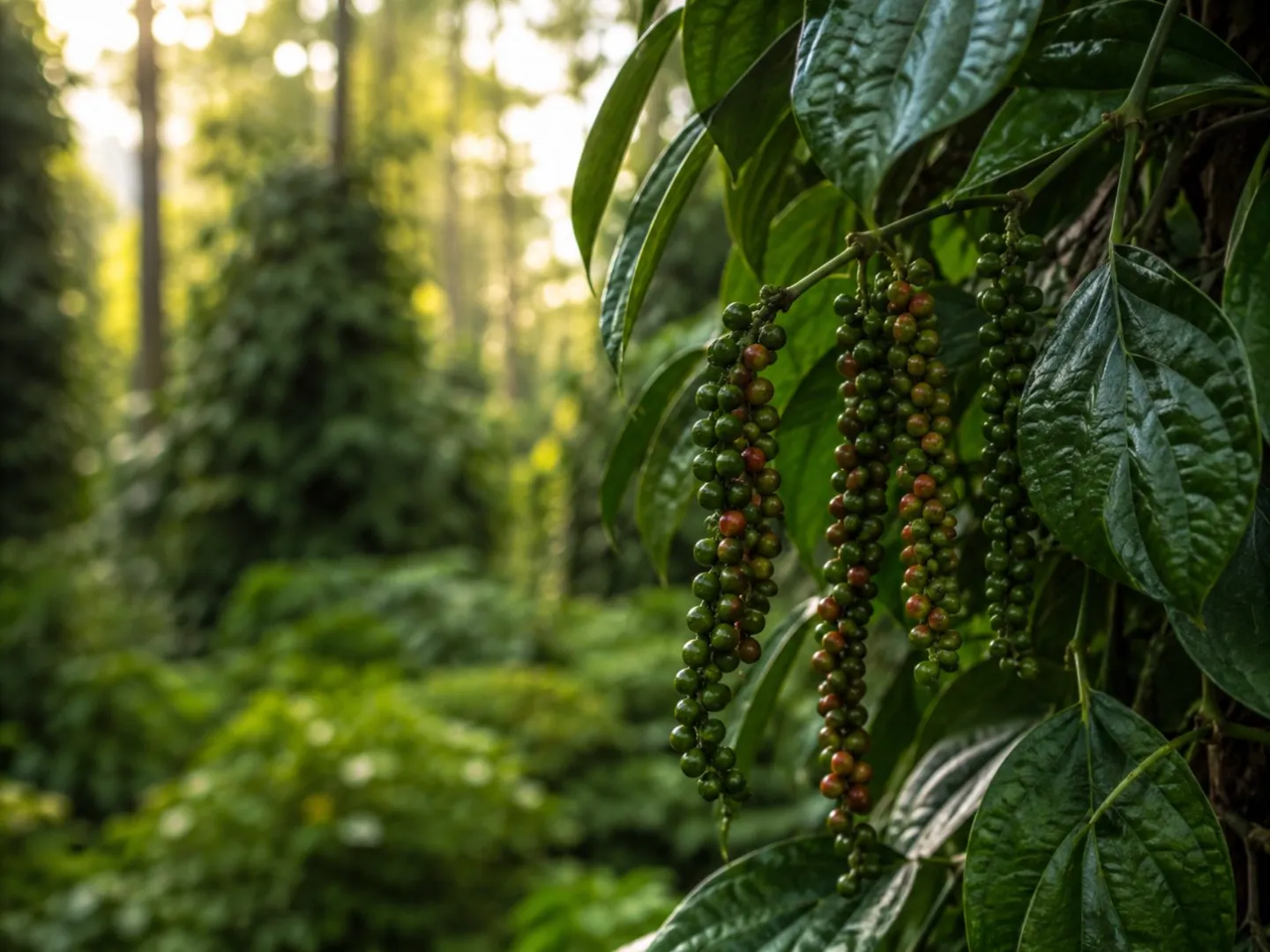
Black pepper takes the long way up.

A vine is planted at the foot of a silver oak and spends three years climbing before it gives anything back. From then it crops for decades. Every spike is cut by hand from a ladder, which is why estate pepper is expensive and why it is worth it.

Grade specification
Grade
Garbled bold
Moisture
≤ 11%
Bulk density
500–570 g/l
Picked
March – April, once a year
In the mouth
Late heat, pine, a citrus lift
Grown
Organically
Best used
Within 3 years
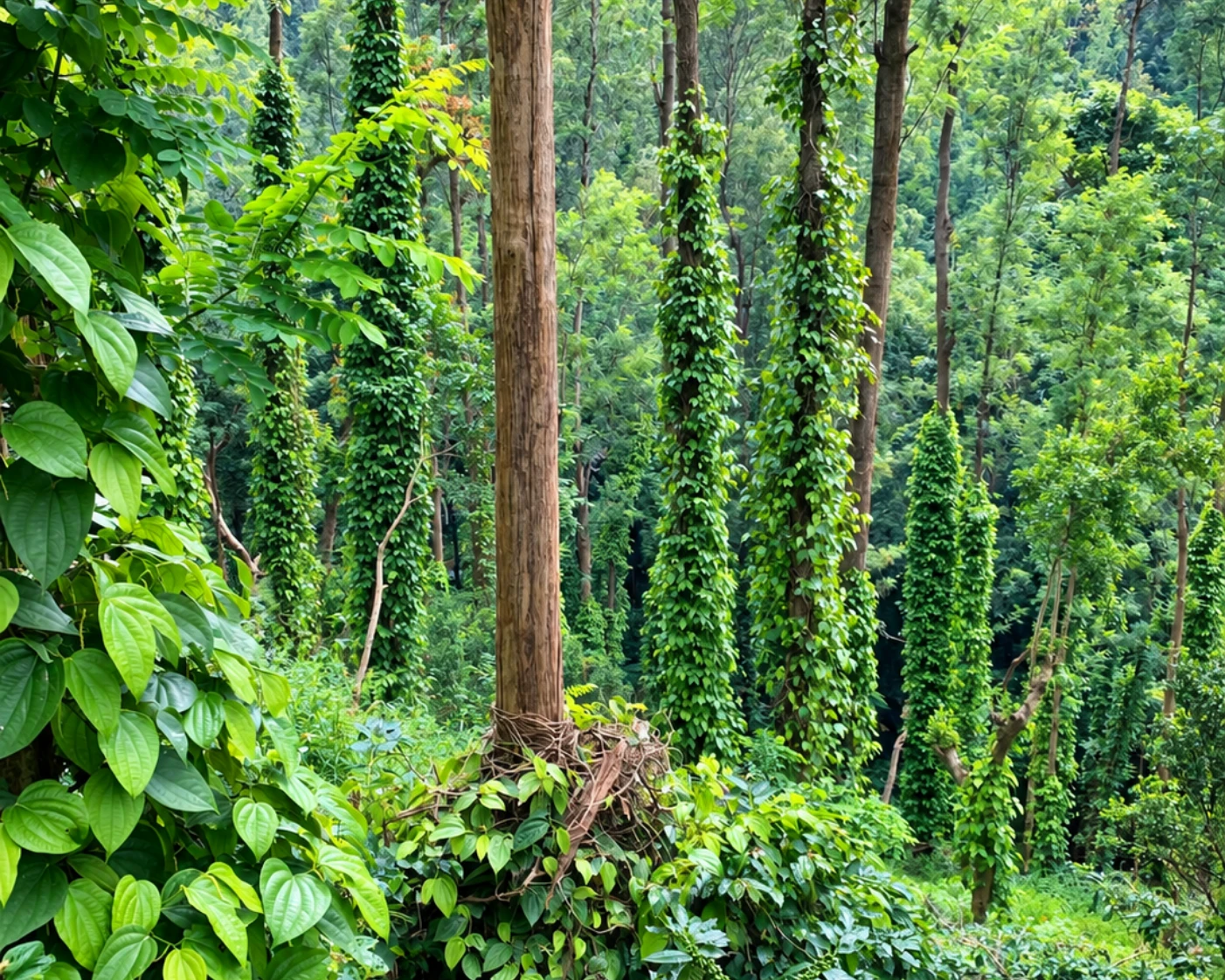
Mature pepper vines wound up the trunks of estate silver oak shade trees
A vine at roughly fifteen years, three-quarters of the way up its tree.
Green pepper spikes hanging from a vine with the coffee rows visible below
Spikes lengthen through the monsoon and are cut when the first berry turns.

Vine to pouch

Six steps between the ladder and the sealed bag.

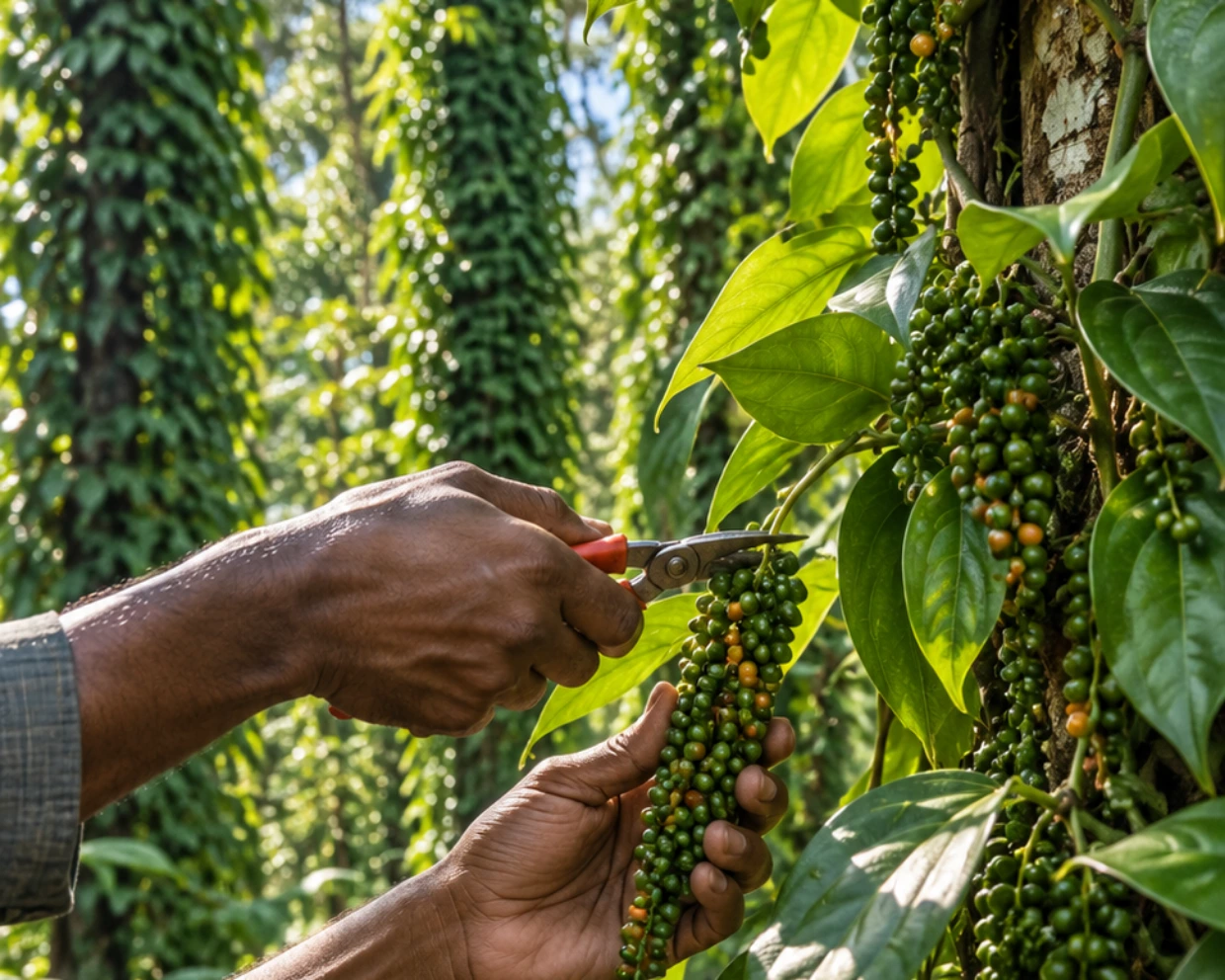
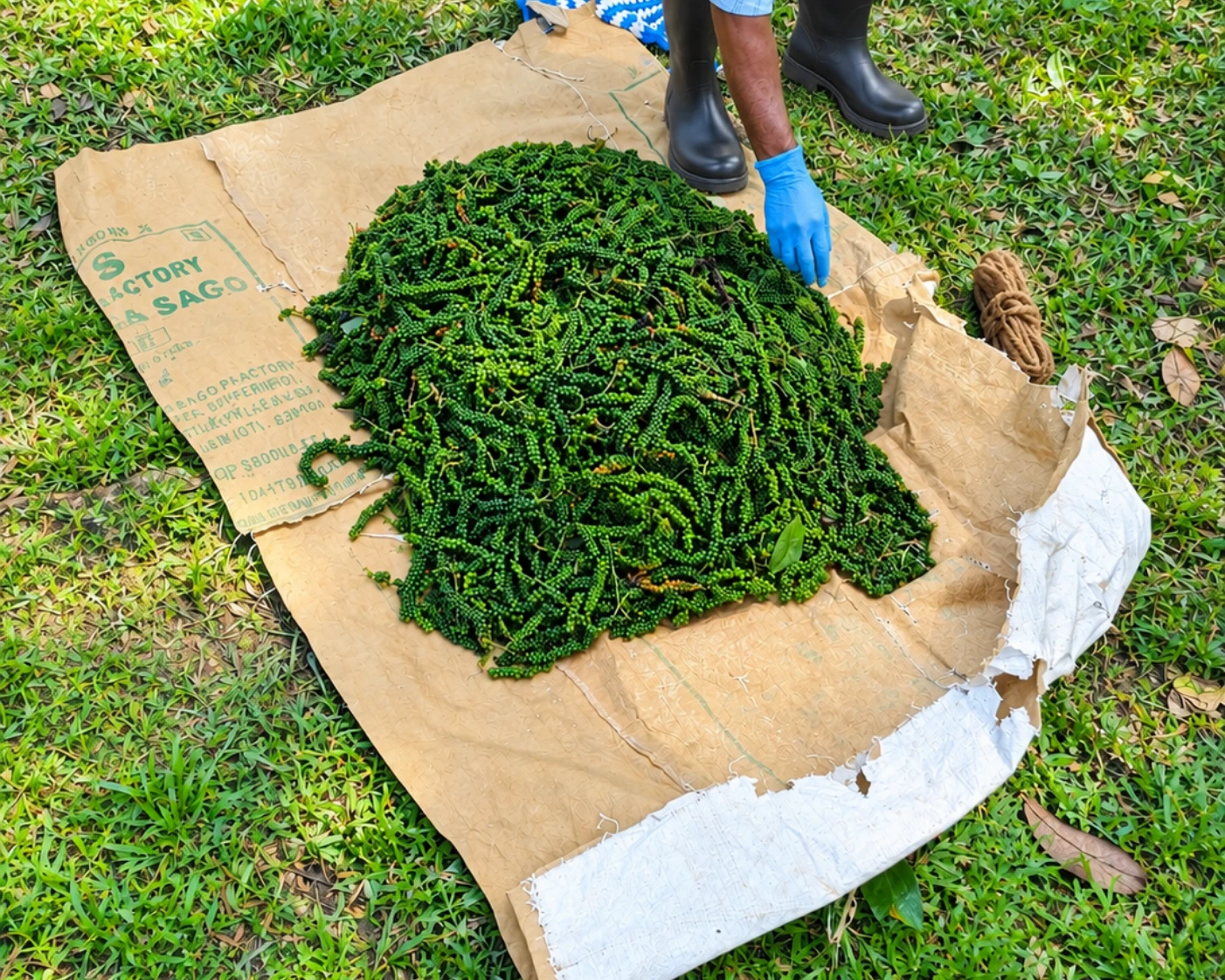
  1. Cutting ripening pepper spikes from a vine during the estate pepper harvest

    01

    Harvesting

    A spike is cut when the first berry on it turns from green to orange. Wait for the whole spike and the early berries drop; cut too soon and the oil never arrives.

  2. Separating pepper berries from the spike by hand on the estate

    02

    De-spiking

    Berries come off the stalk by hand and by threshing, then everything is winnowed until nothing but berry is left in the basket.

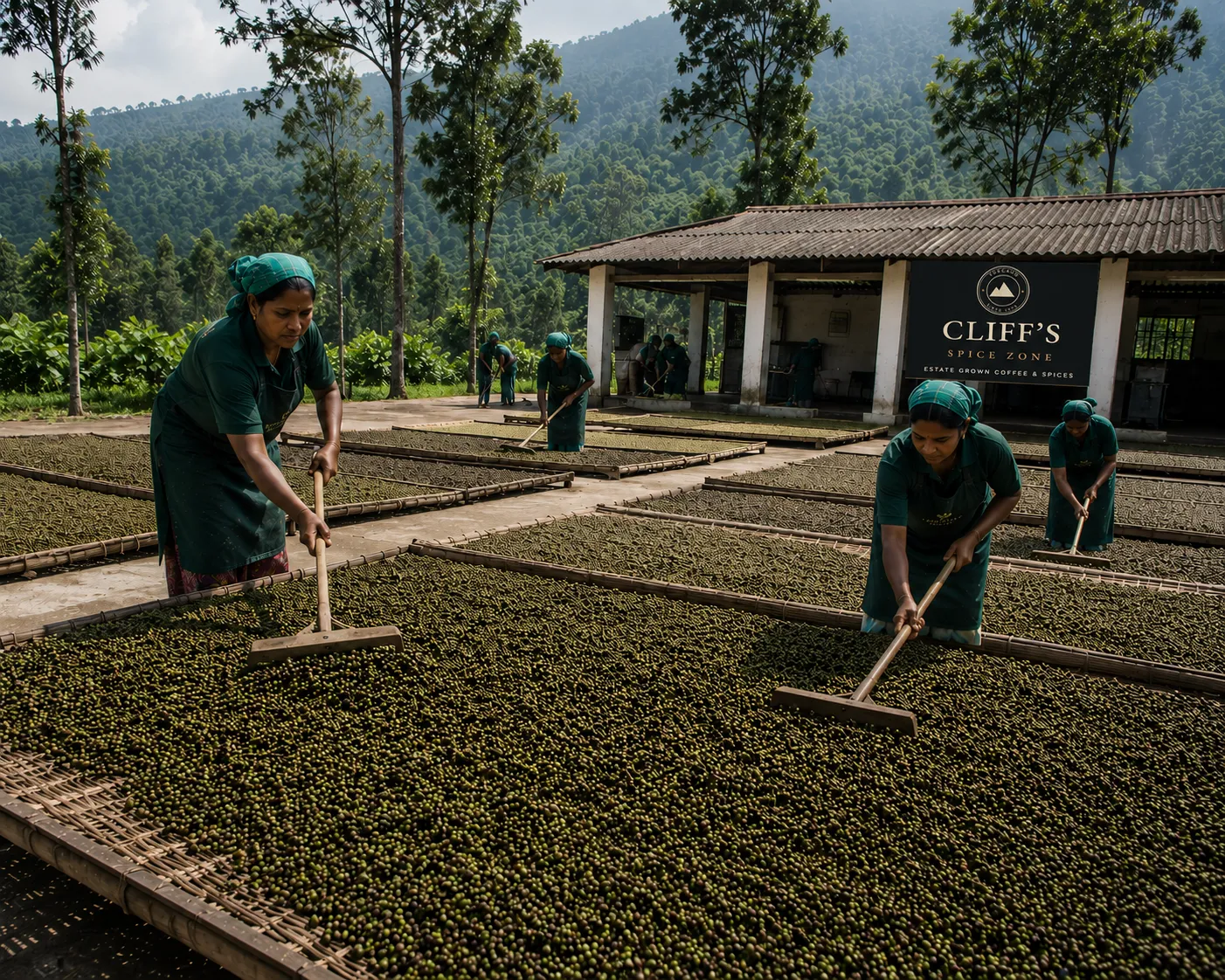
  3. Pepper spread across the estate yard to sun-dry

    03

    Drying

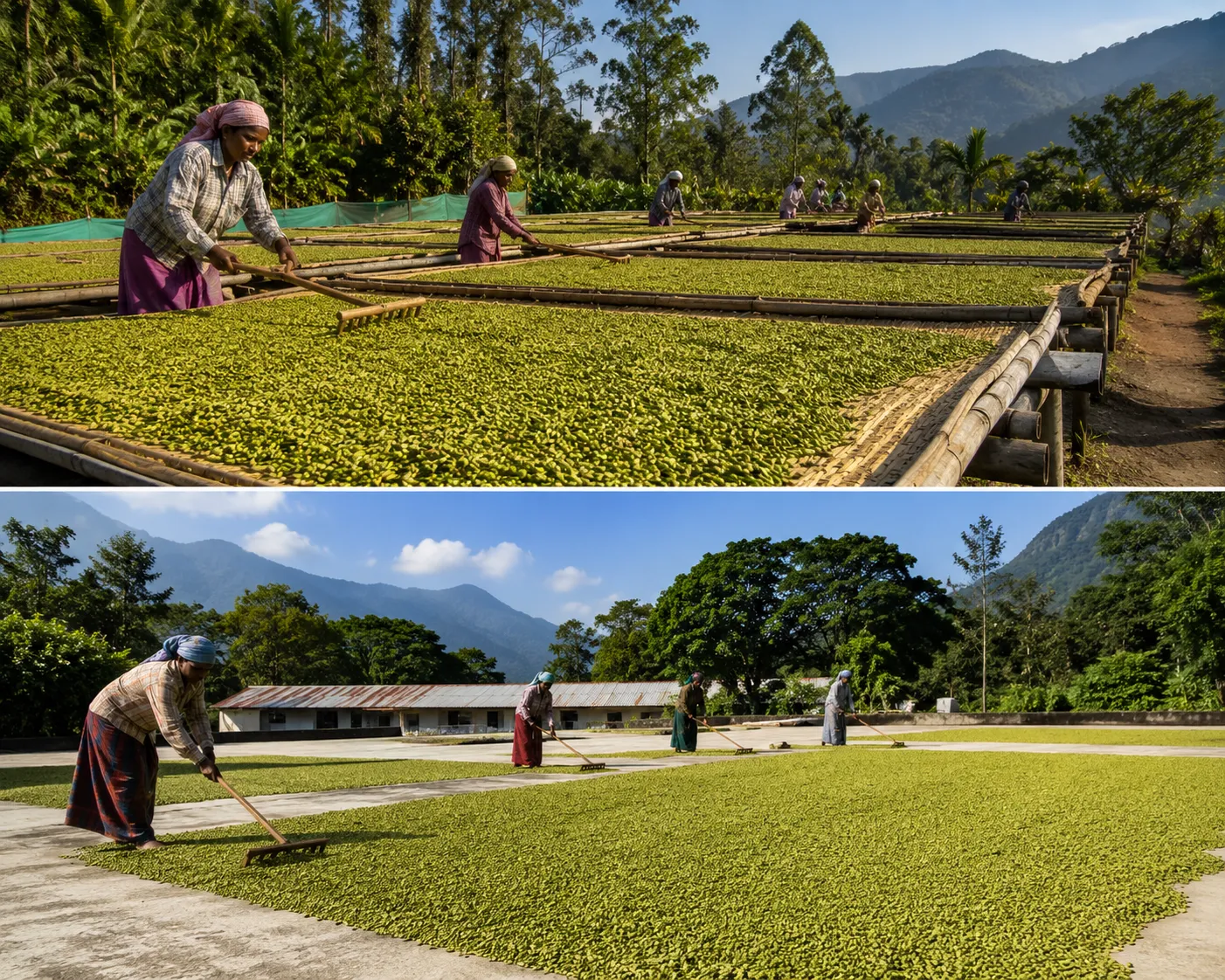
    Three to seven days on the yard, raked through the day and covered at dusk, until moisture reads eleven percent. The wrinkle on a good peppercorn is made here.

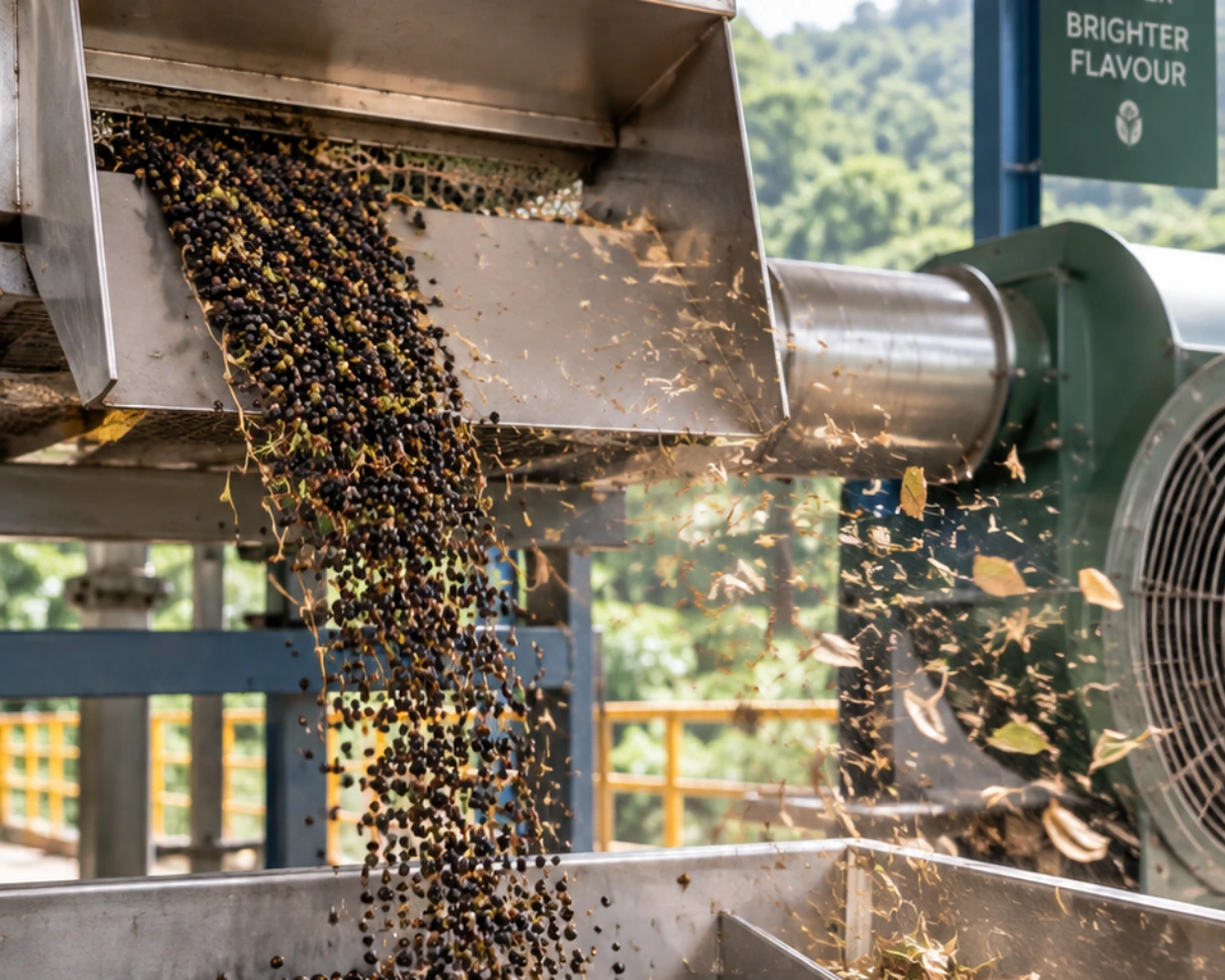
  4. Dried pepper falling through the estate winnower as chaff and light berries blow clear

    04

    Winnowing

    Dried corns are dropped through moving air. The light and hollow berries carry off with the last of the dust; what falls straight is what gets graded.

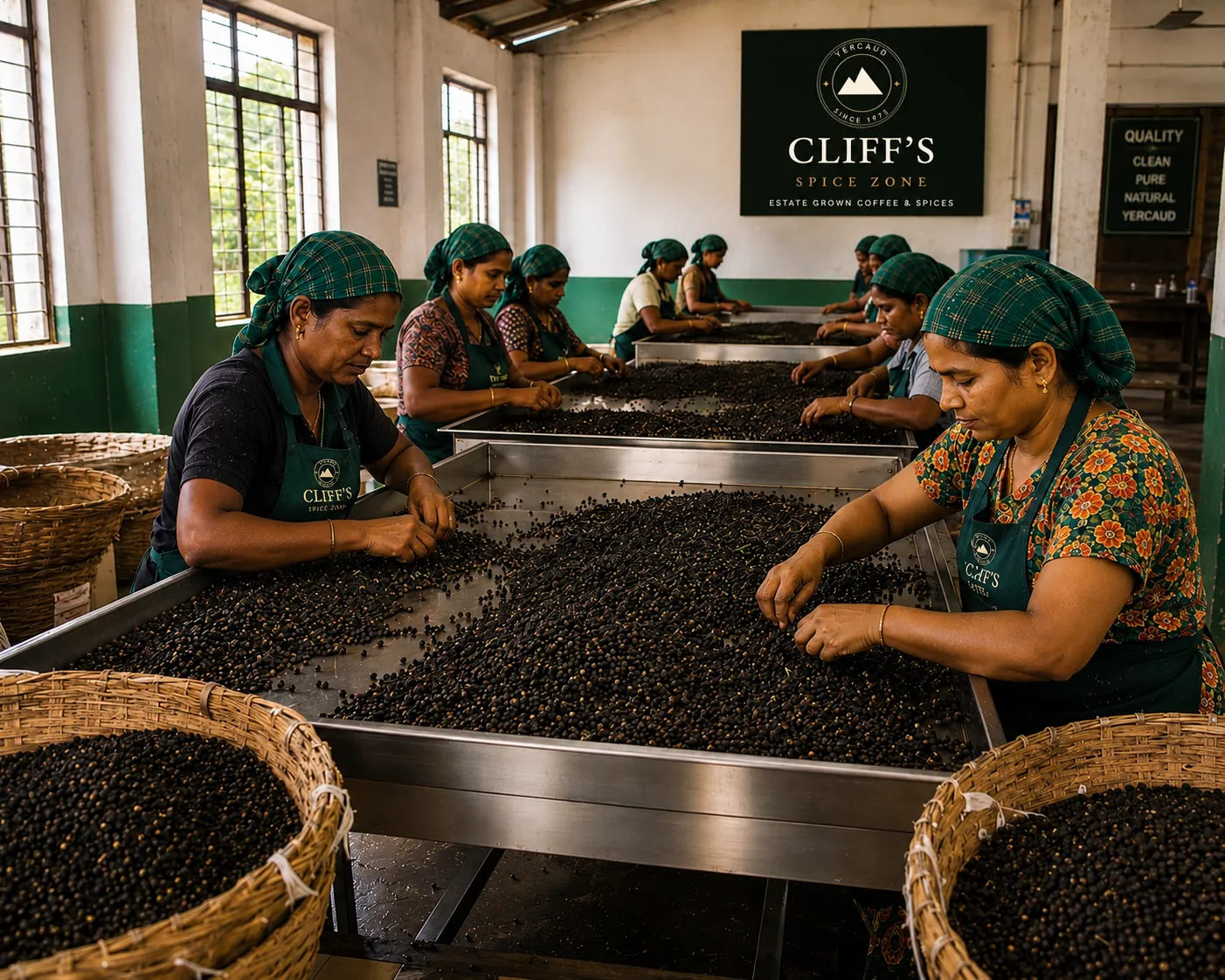
  5. Dried peppercorns being hand-sorted and graded on the estate sorting table

    05

    Sorting & grading

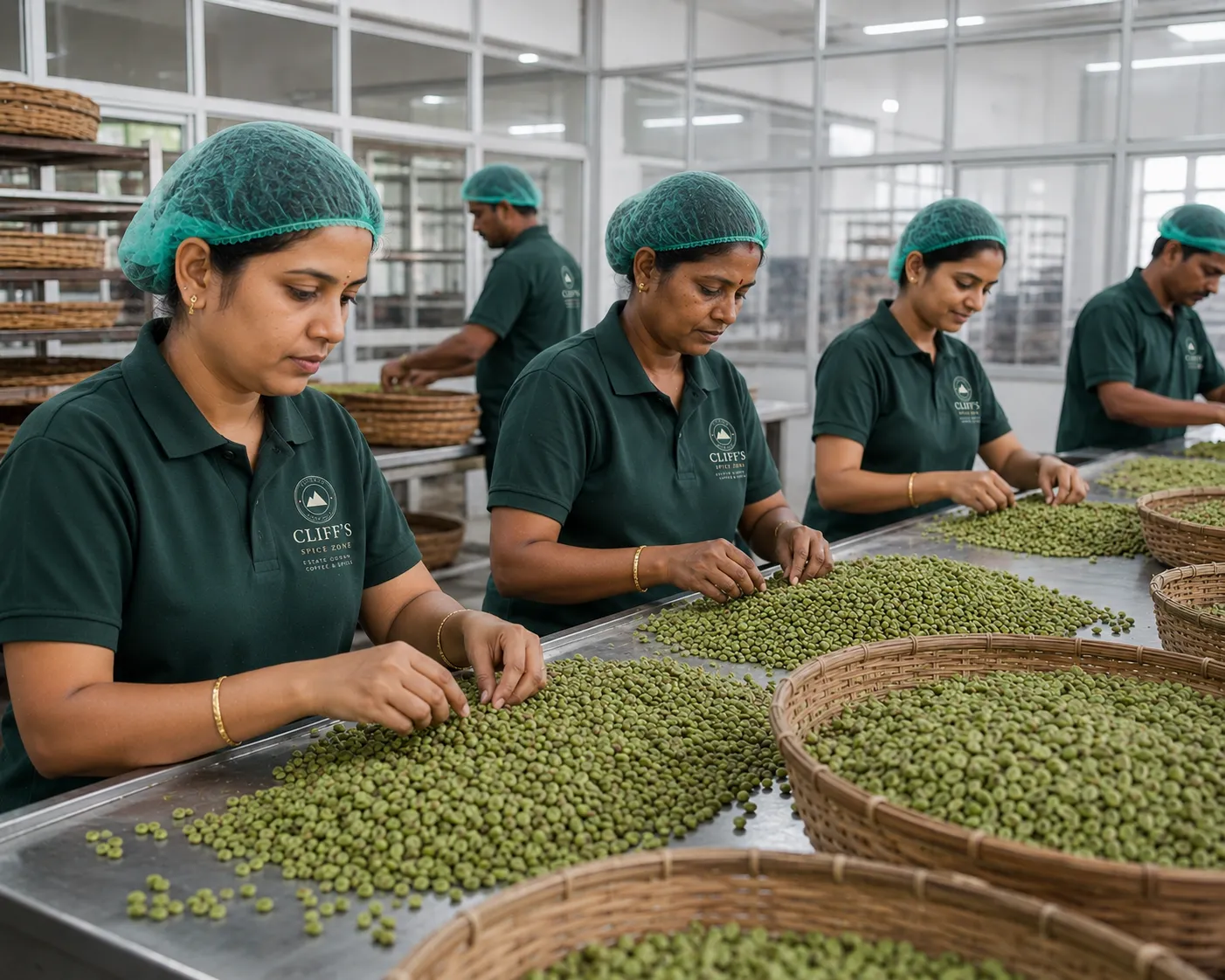
    Hand-garbled, then graded by bulk density. Light berries, broken skins and pinheads are separated out — they are perfectly edible, but they do not make the grade.

  6. Graded estate peppercorns being weighed and sealed into stamped packaging

    06

    Packaging

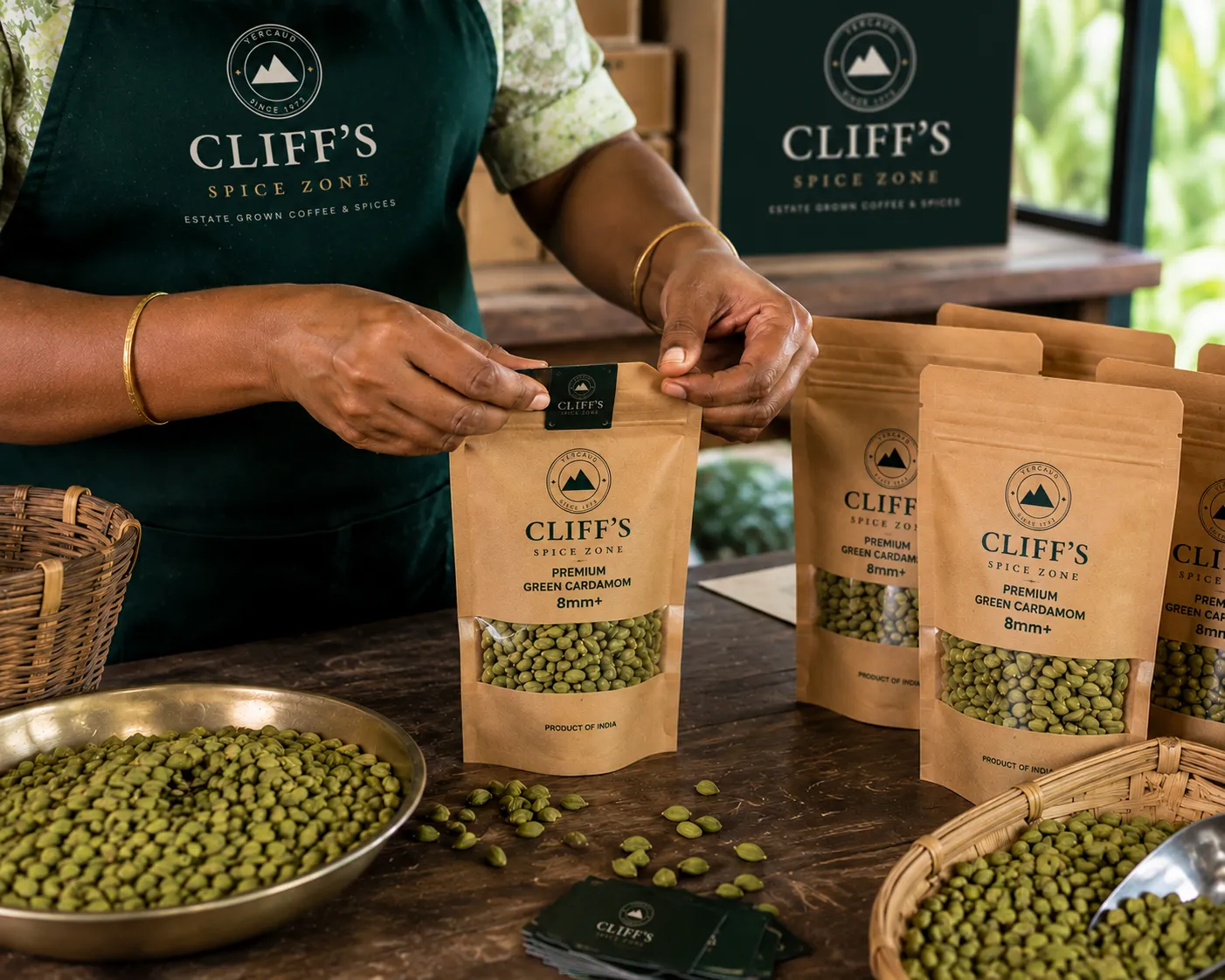
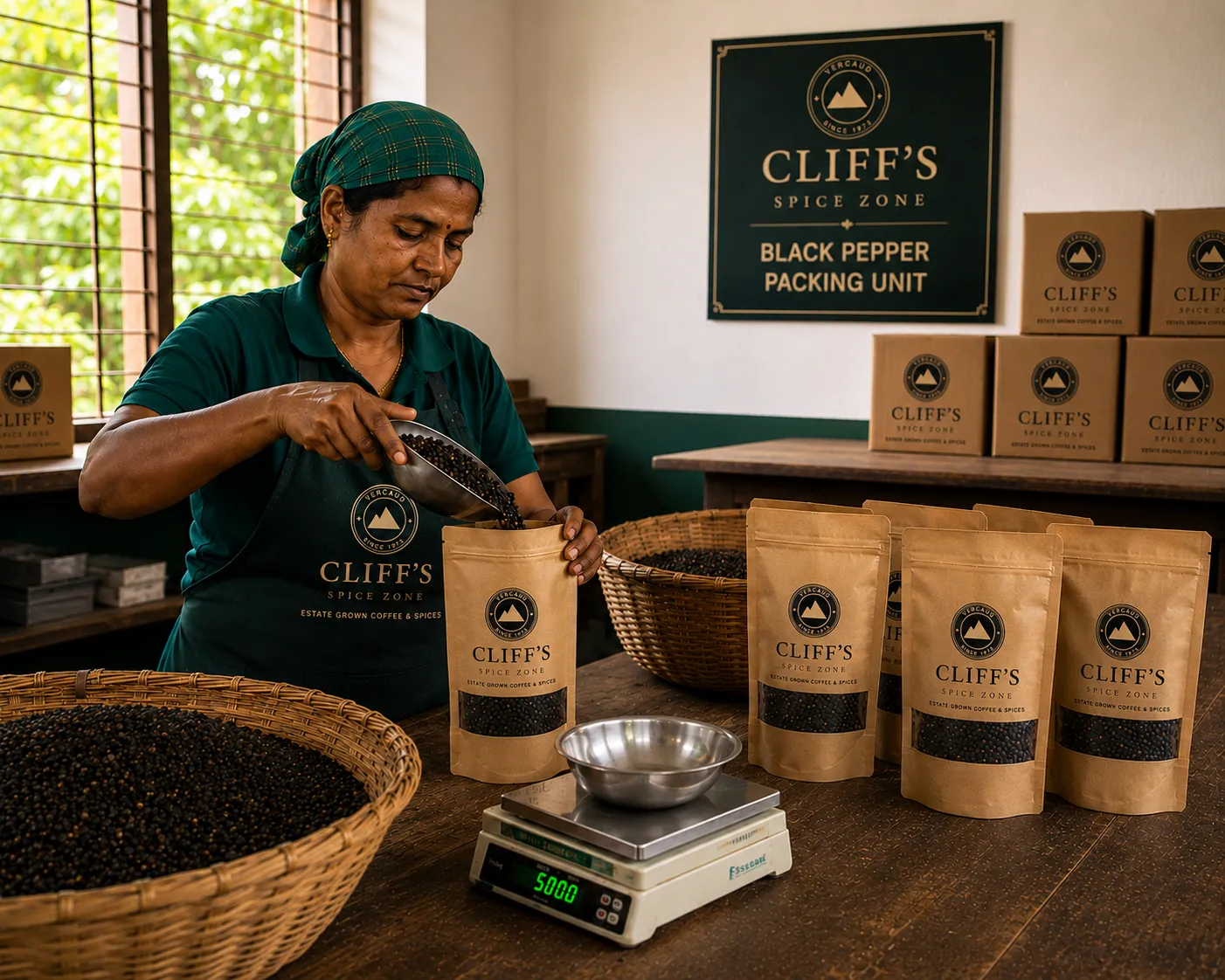
    Weighed and sealed whole — never pre-ground — with harvest month stamped on the pouch.

Crop 02 · Elettaria cardamomum

Cardamom wants the darkest ground we have.

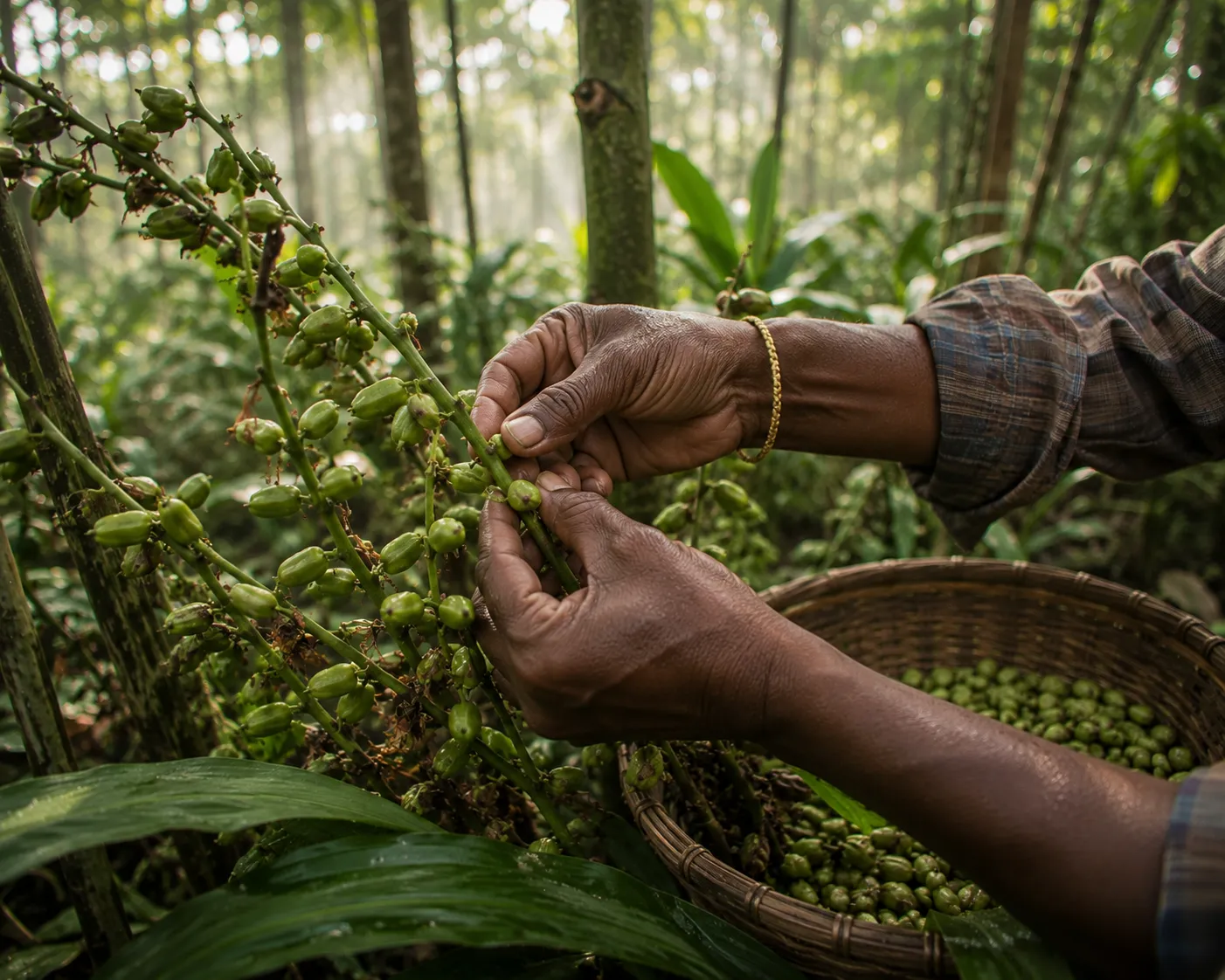
It grows where nothing else will — the deep shade between coffee rows, on damp slopes below the tree line. The capsules ripen at ground level on runners, so every pod is picked kneeling. Cured green, it stays green; cured hot, it bleaches and the seed goes grey.
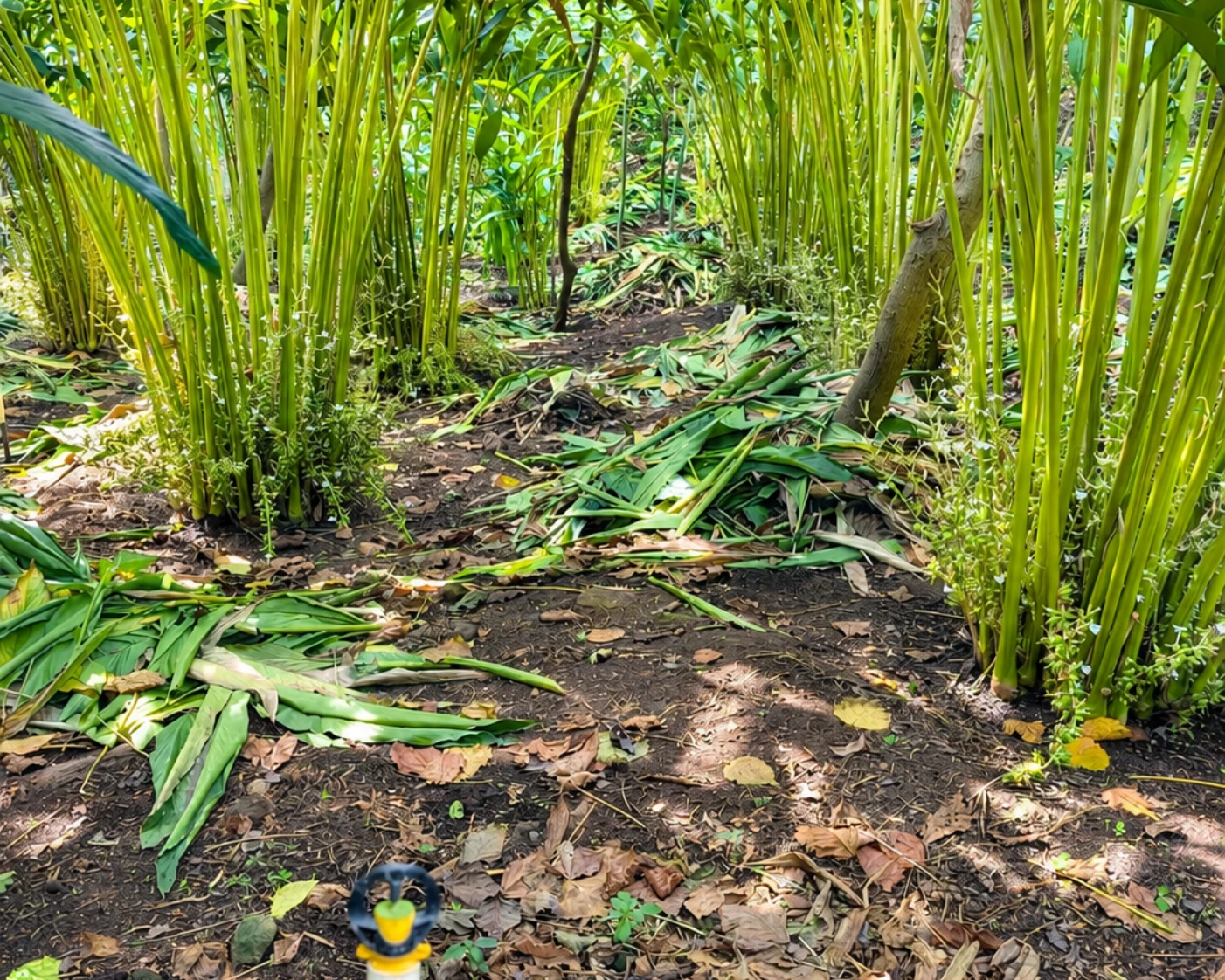
Rows of cardamom plants growing in deep shade between the estate coffee blocks
The one crop on this estate that never sees the sun yard.
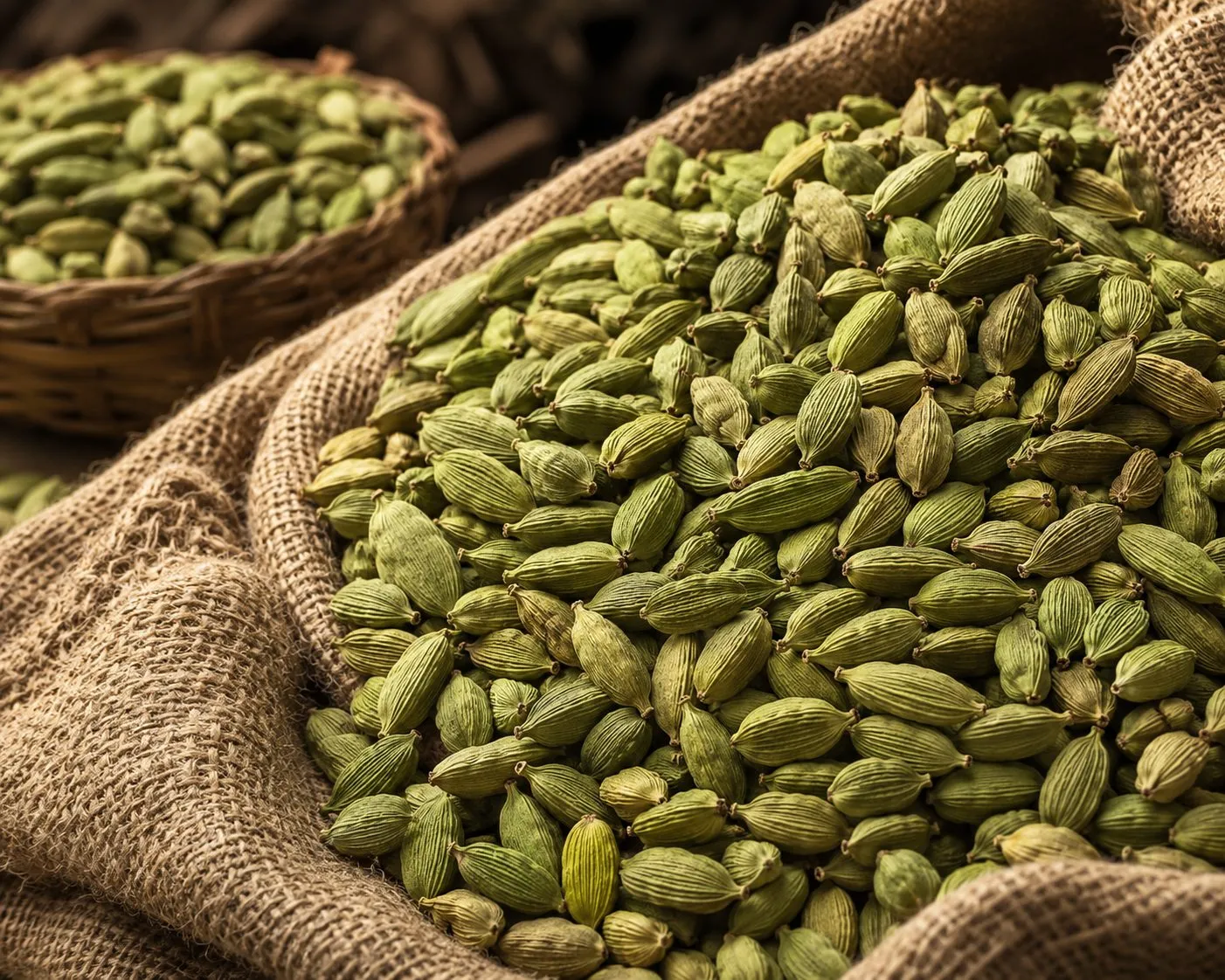
Green estate cardamom pods in cane baskets and jute sacks after picking
Picked just short of full ripeness so the pod holds its colour.
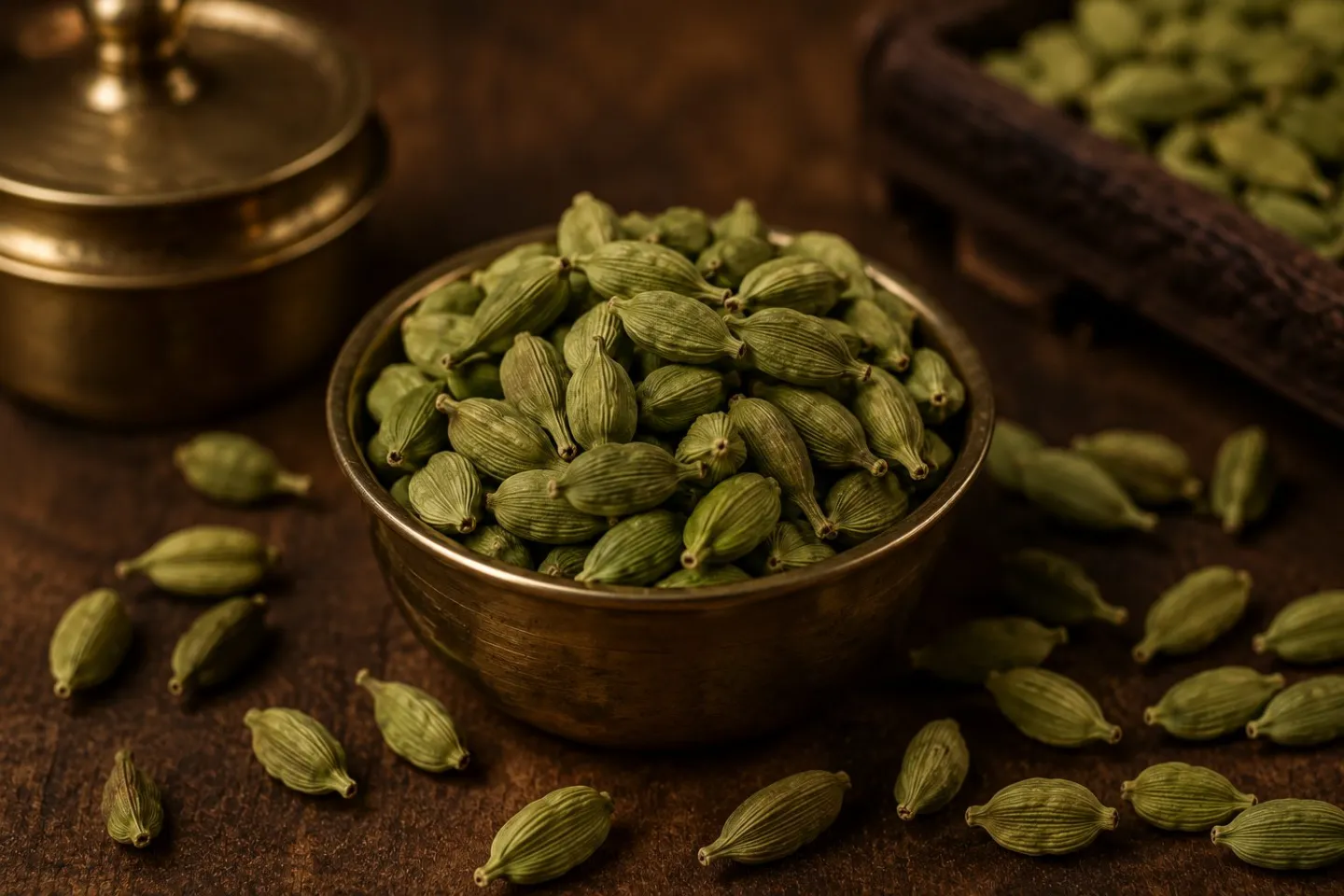
Cured green estate cardamom pods in a brass bowl
Cured low and long: green skin, black seed, oil intact.
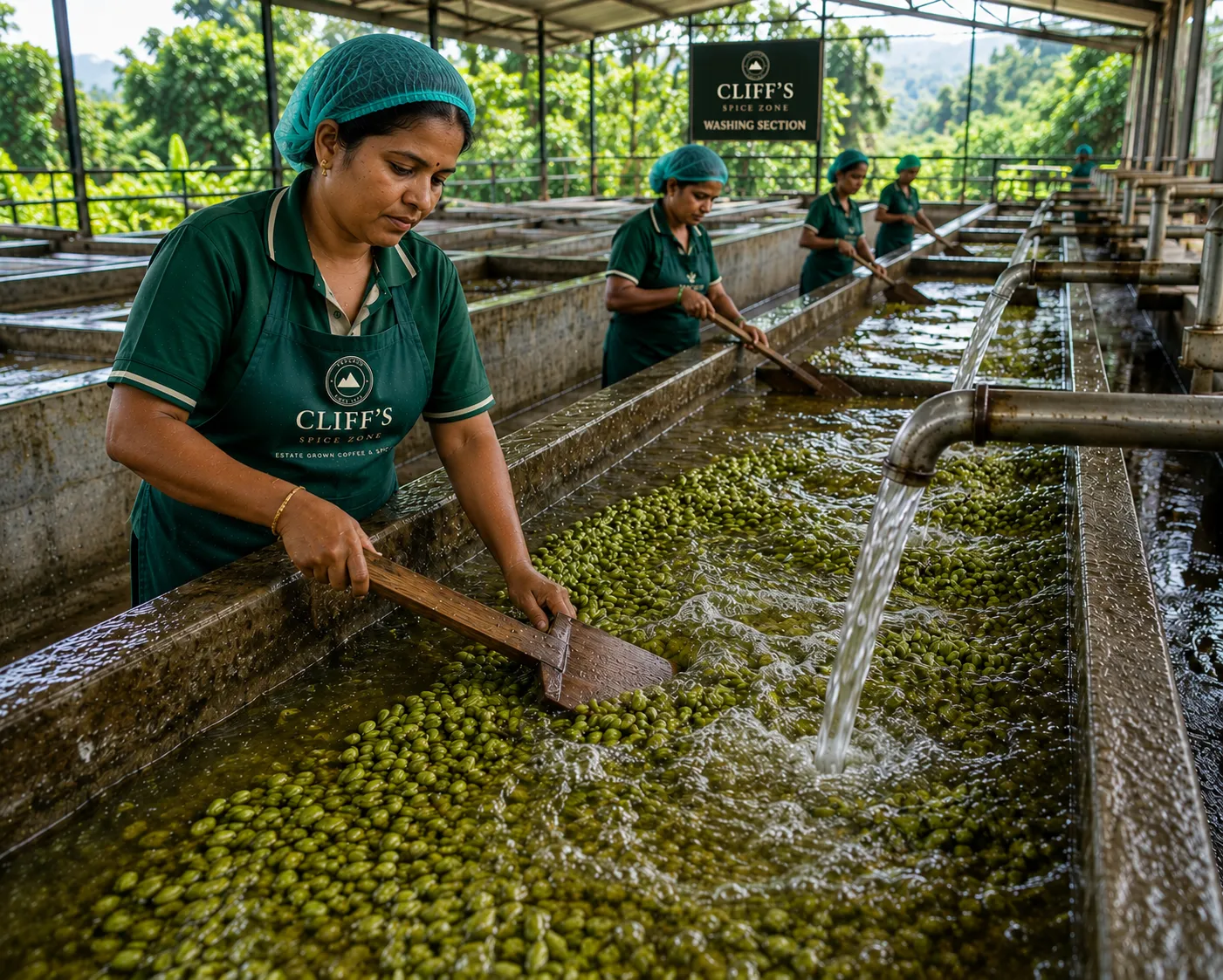
Kneeling to pick ripening cardamom capsules from runners at ground level Freshly picked cardamom being washed and cleared of stalk remnants Cardamom curing slowly at controlled temperature in the estate drying room Cured cardamom being inspected and graded by size and colour on the estate Graded green cardamom sealed into moisture-barrier packing

Step 01 · Year round

Harvesting

Capsules are taken just before full ripeness, when the pod is firm and still deep green. A block is picked over four or five rounds across the season, because a runner never ripens all at once.

  1. 01 Harvesting Year round
  2. 02 Washing & cleaning same day
  3. 03 Curing & drying 18–24 hrs
  4. 04 Inspection & grading by hand
  5. 05 Final packaging sealed

Green cardamom · field to seal

The fourth harvest

The one crop the estate does not decide.

Measured by the weight of frames drawn, an April draw runs coffee blossom at close to half, silver oak behind it, then pepper vine, wild jamun and whatever the shola between the blocks is doing. Nobody chooses the mix. The fortnight does.

Drawn April Share of frame weight
  • Coffee blossom March · 10 days 46%
  • Silver oak Feb – Apr 21%
  • Pepper vine May – Jun 14%
  • Wild jamun April 12%
  • Shola undergrowth Year round 7%

Depth and type size both follow the share, down to a floor that keeps the thinnest label readable. Not one of these five was planted for the bees.

Hive to jar

Cloth, never pressure

A fine filter under pressure gives a clearer jar and takes the pollen with it, which is the only evidence of where the honey came from. Ours is strained through cloth at hive temperature and jarred the same day — cloudy, and unblended.

Heat
40°C, ours · 65°C, commercial
Filtering
Cloth, at hive temperature

Twice a year

Two draws, and we run out

Frames come off in April and again in October, and never all of them — the colony keeps what it needs to sit out the monsoon. It sets solid somewhere around February, which is what unheated honey does when nobody has heated it to stop it.

Drawn
April & October
Sets by
February, in the jar
Grown
Organically
Best used
Within 2 years

What we check, and what we say

Quality is a measurement, not an adjective.

{{ f.a }}

In the wings

The range grows when the land does.

Cocoa is in trial under the wettest shade. Avocado and hill banana are being tried in trial blocks, while areca nut is being explored. None of it is offered until the estate has grown, cured and cupped enough of it to stand behind — which is generally three seasons, not three months.

We launch only what the estate itself grows. There are no bought-in lines under this name and there never have been.

  1. Cocoa

    Under the wettest shade

    In trial
  2. Areca nut

    Being explored in the lower blocks

    Considered
  3. Avocado

    In trial blocks

    Considered
  4. Hill banana

    In trial blocks

    Considered
  5. Time to shelf Three seasons

Onward

Walk the pepper trail in person.

A keeper will show you a vine at fifteen years and a cardamom runner in the same hour. Or read how the farming decisions behind all of it are made.

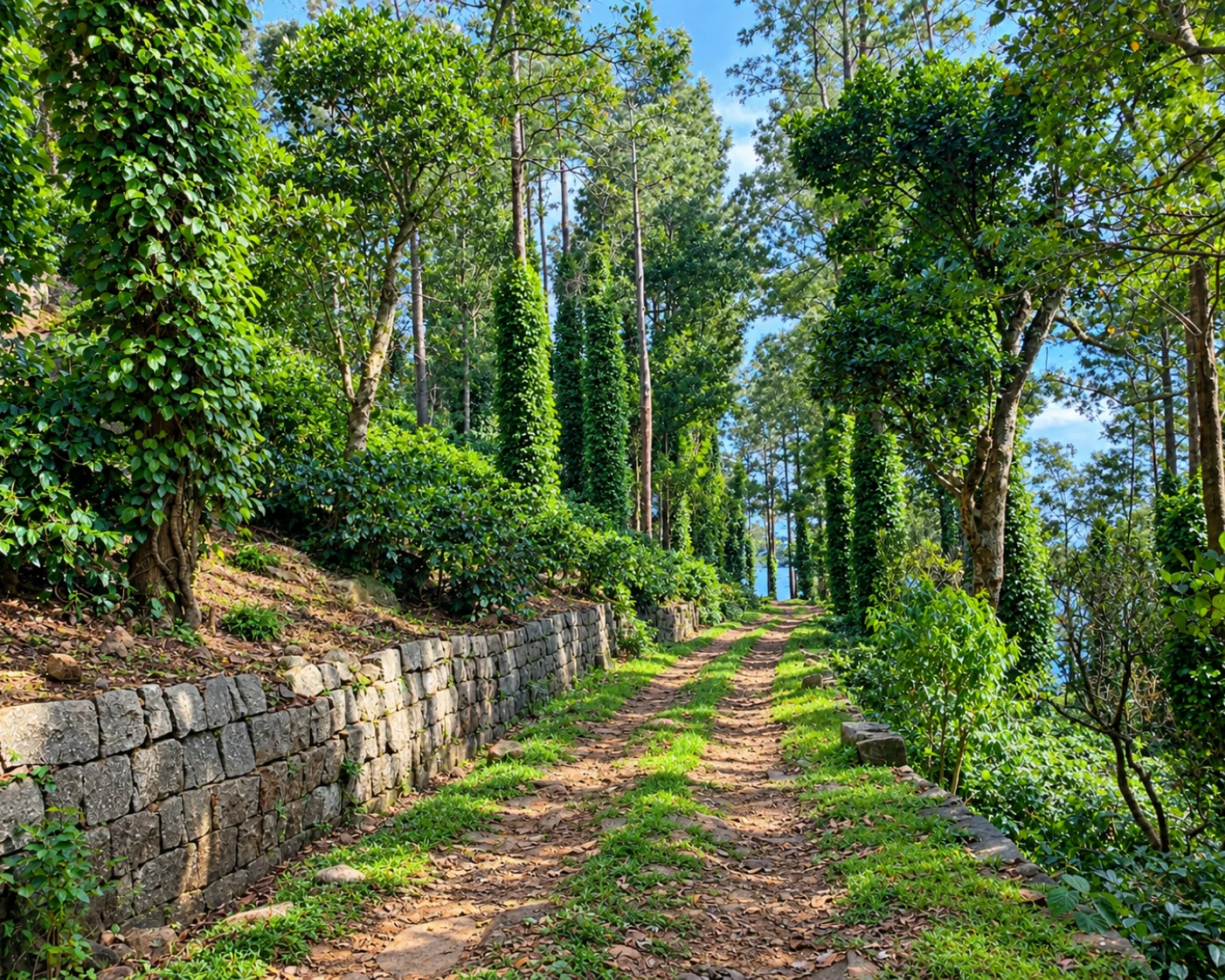
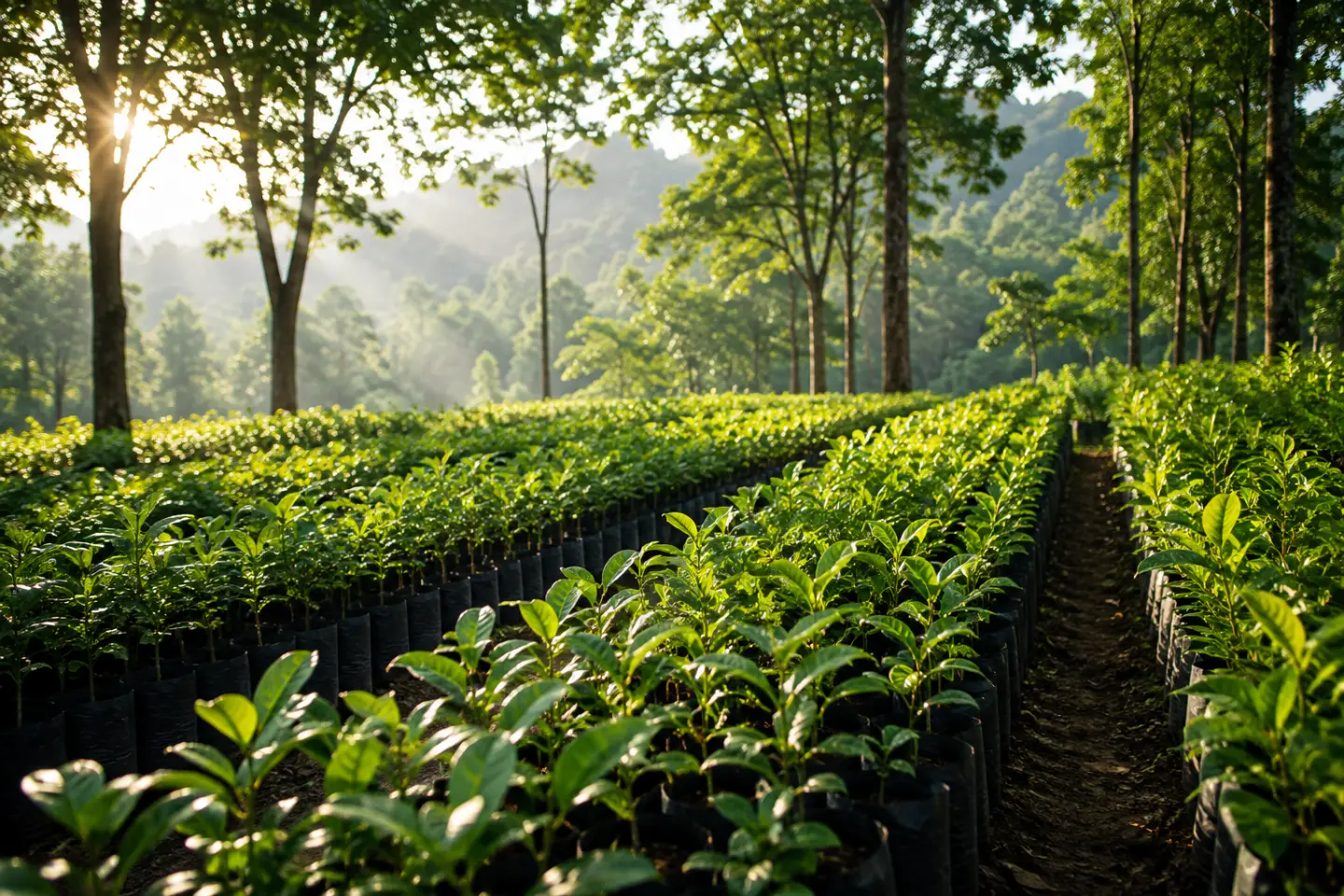
The estate road on the walk in, coffee below and pepper vines above Visit See the experiences Young coffee plants raised in the estate nursery under tall shade trees Read Farming philosophy