The method, summarised
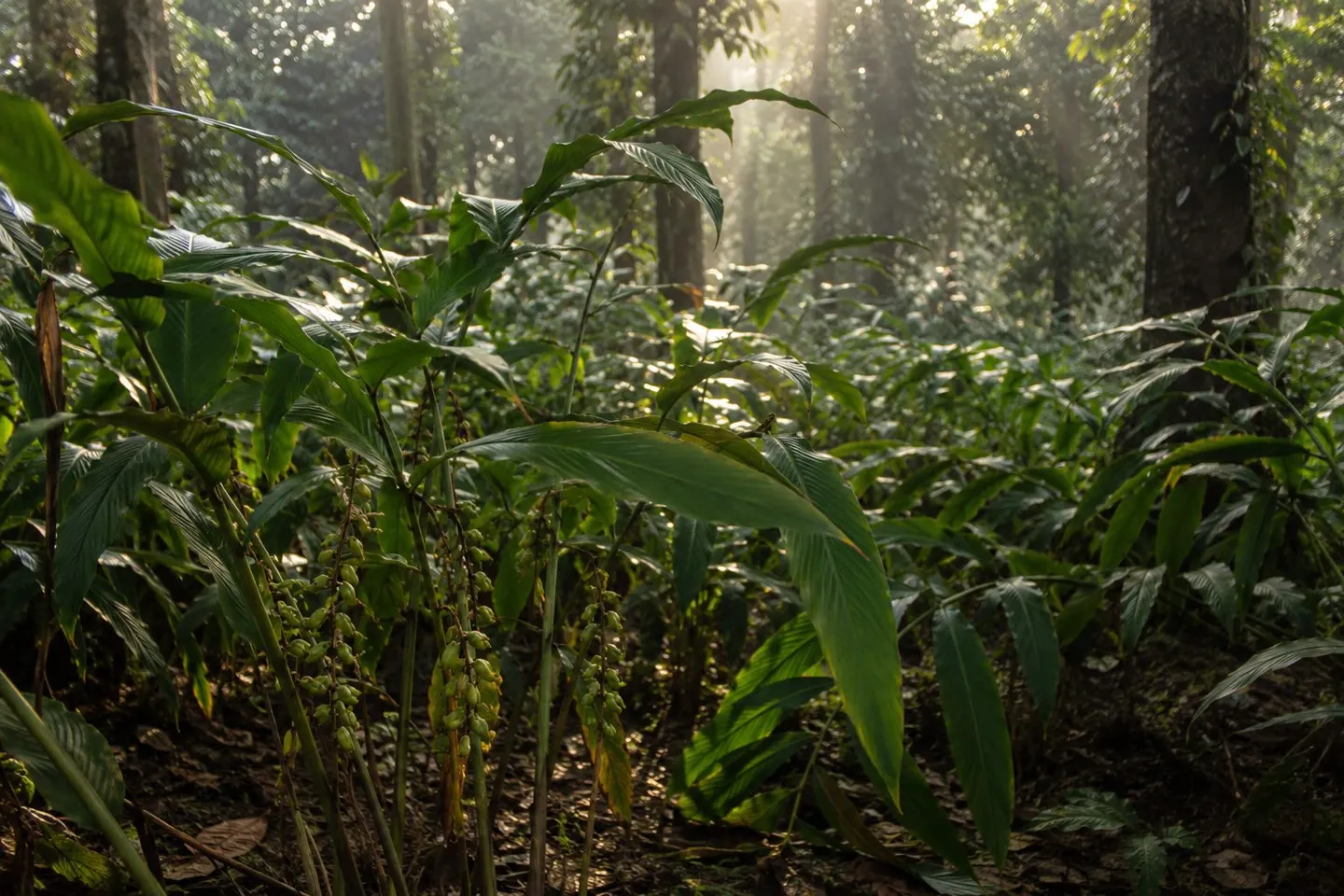
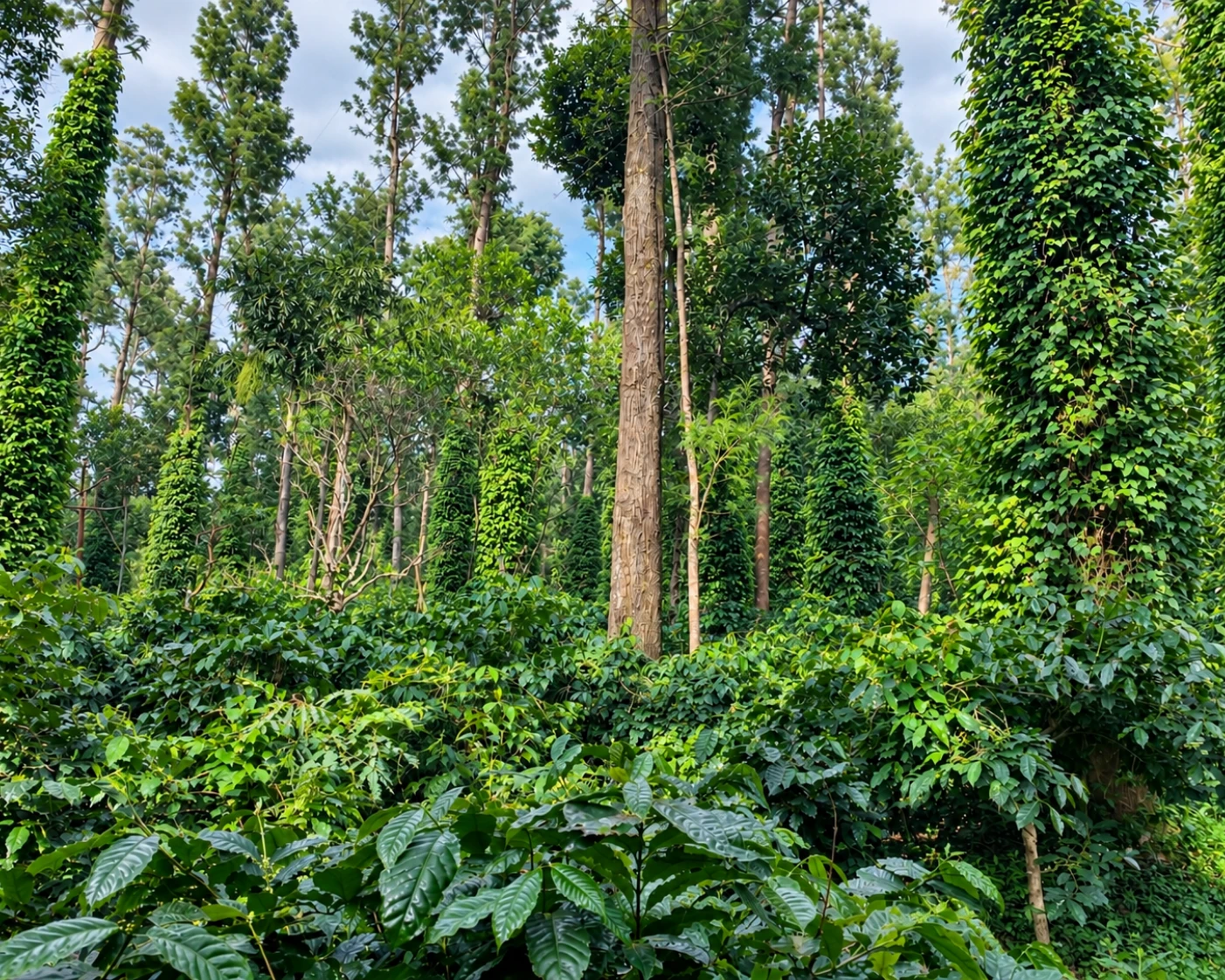
Cliff’s farms shade-grown and intercropped: native canopy held over every row, several crops sharing one acre, water kept on the contour, hand-picking in rounds, sun-drying on the estate yard, and nothing released until moisture, density and defect count have been measured.
The method, in order
Nothing here can be skipped without something else paying for it.


-
01
Seed selection
Seed comes off mother plants inside our own fences — bushes that have carried this slope, this rainfall and this shade for decades and kept cropping. Nothing is ordered from a catalogue. A variety that performs in Chikmagalur has no obligation to perform here, and usually doesn’t.
-
02
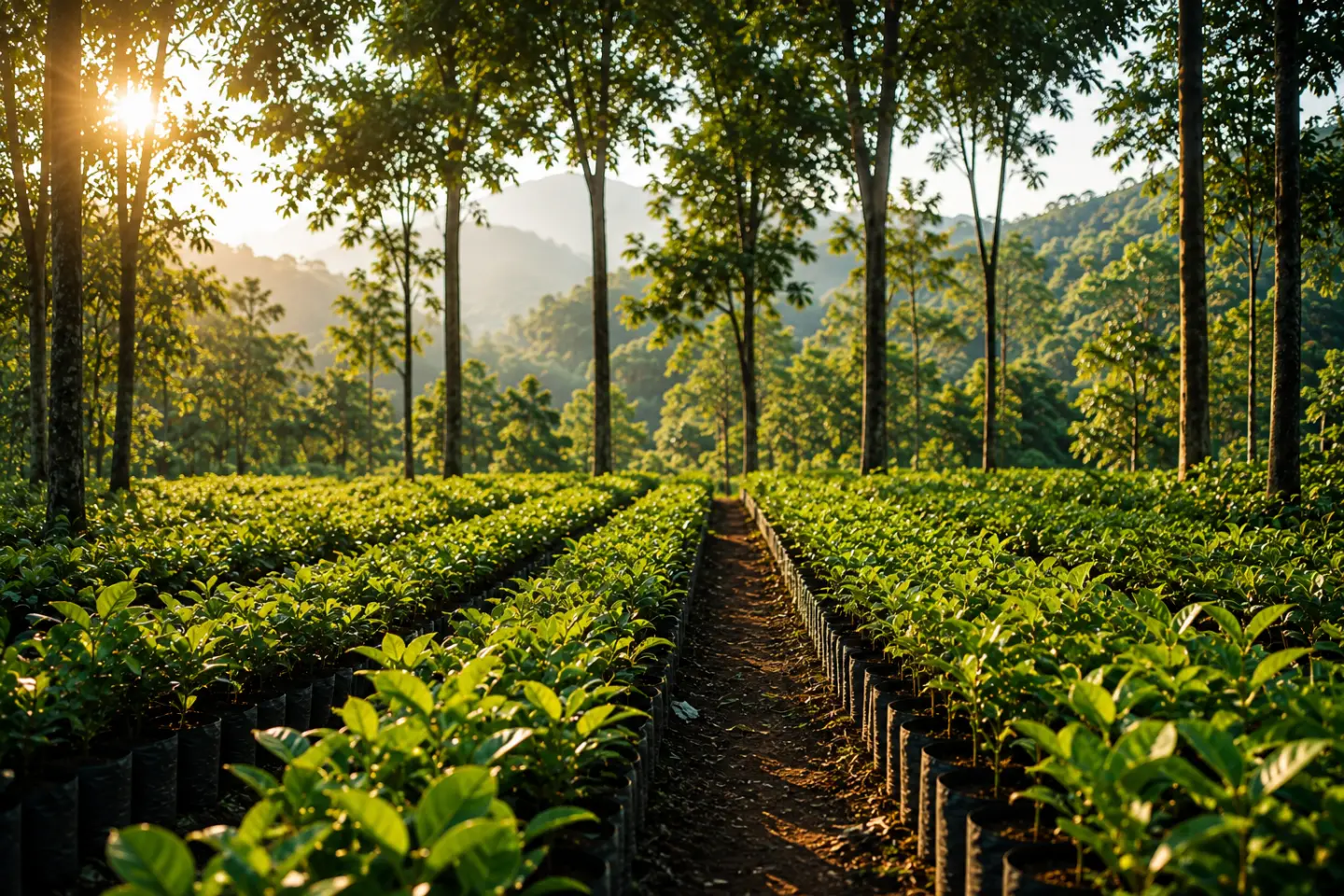
Nursery
Nine to twelve months under nursery shade before anything goes into the ground. Weak seedlings are culled here rather than carried into a block where they will underperform for thirty years. It is the cheapest decision on this list and the one most often rushed.
-
03
Planting
Put out with the first reliable rain, spaced to the slope rather than to a grid. Rows follow the contour, so every line of bushes is also a small terrace holding soil in place. A straight row looks tidier from the air and loses topsoil every monsoon.
-
04
Shade management
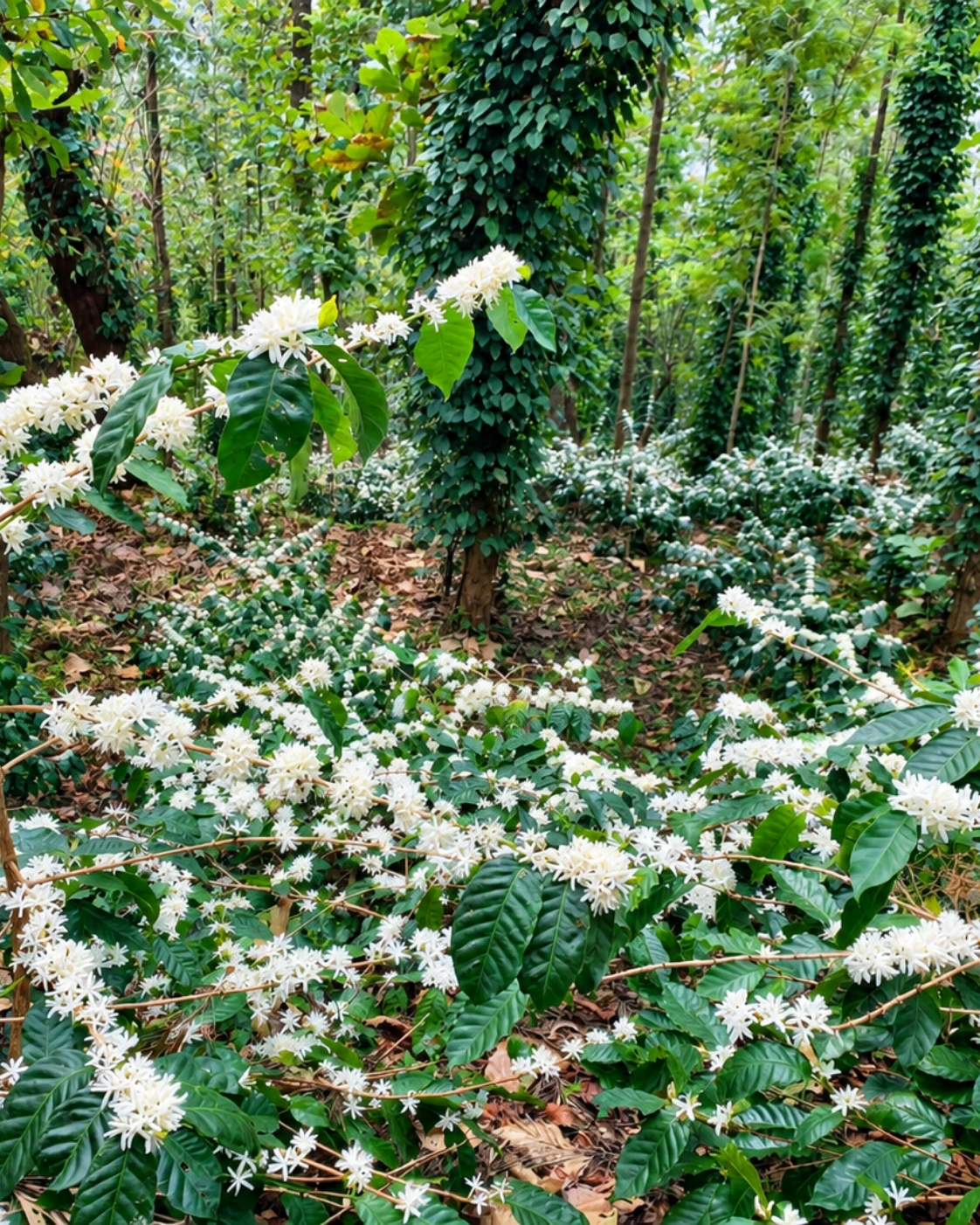
Silver oak and native species are lopped, never felled. Two or three times a year the canopy is thinned by hand to keep roughly half-light on the rows — enough sun to ripen, enough shade to slow it down. Cut too much and yields spike for one season, then the soil starts to go.
-
05
The natural ecosystem
Birds are the borer control. Civets, spiders and predatory wasps do the rest. Nothing broad-spectrum goes across this canopy, because the first thing it kills is the workforce that has been doing pest control here for free since the first planting. Intervention is targeted, recorded and rare.
-
06
Water conservation
The decision is not whether to hold water but where to hold it. Trenching along the contour and pits at the low corners bank the monsoon underneath the block that will be thirsty in March, rather than somewhere convenient that then has to be pumped back uphill. It is dug out before the rain arrives, every year, or it does nothing at all.
-
07
Harvesting
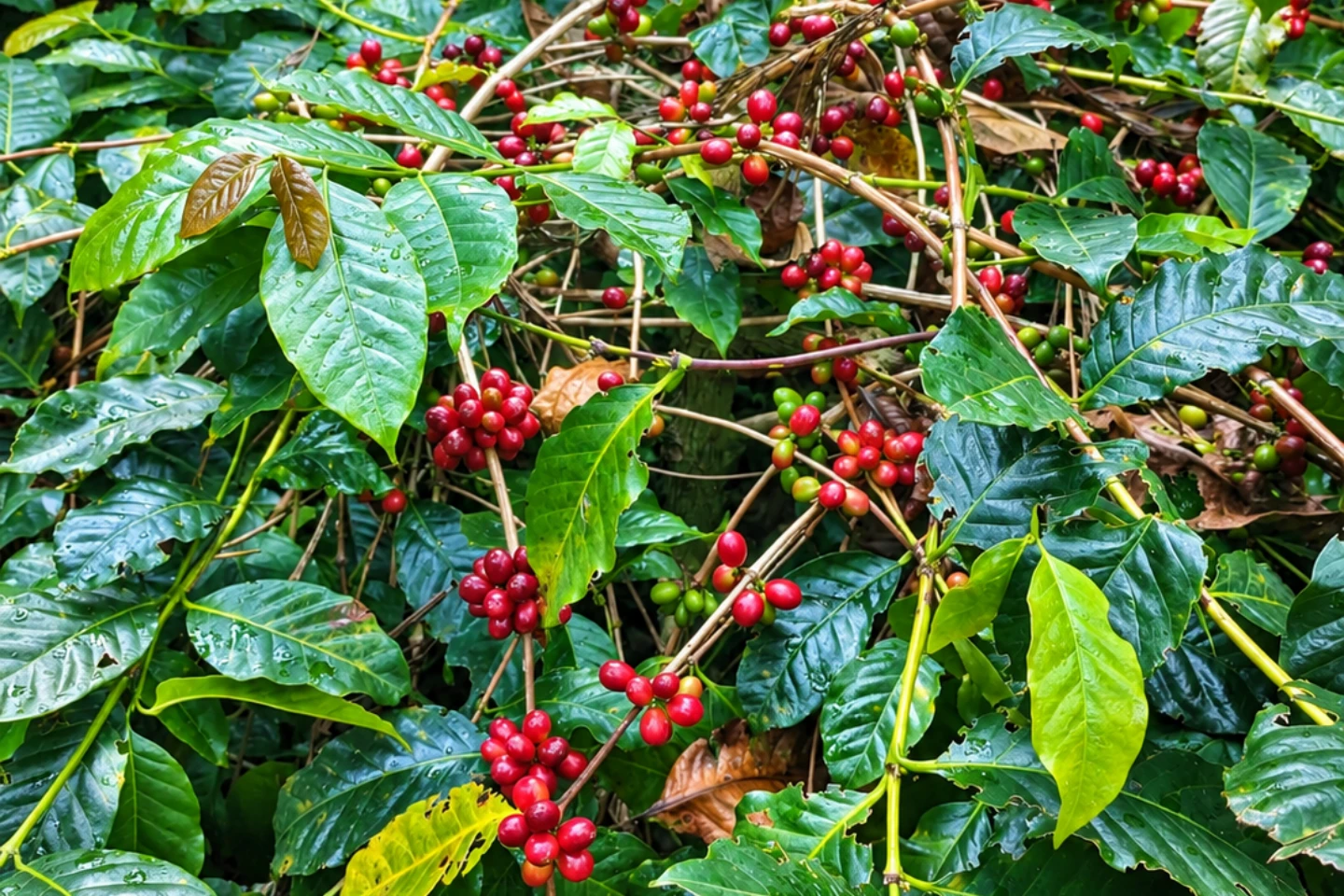
Selective picking, several rounds per block, judged by colour and by give. Strip-picking a branch is three times faster and puts green fruit into the same basket as ripe — and no amount of careful processing afterwards recovers from it. This is where most of the labour cost on this estate sits, deliberately.
-
08
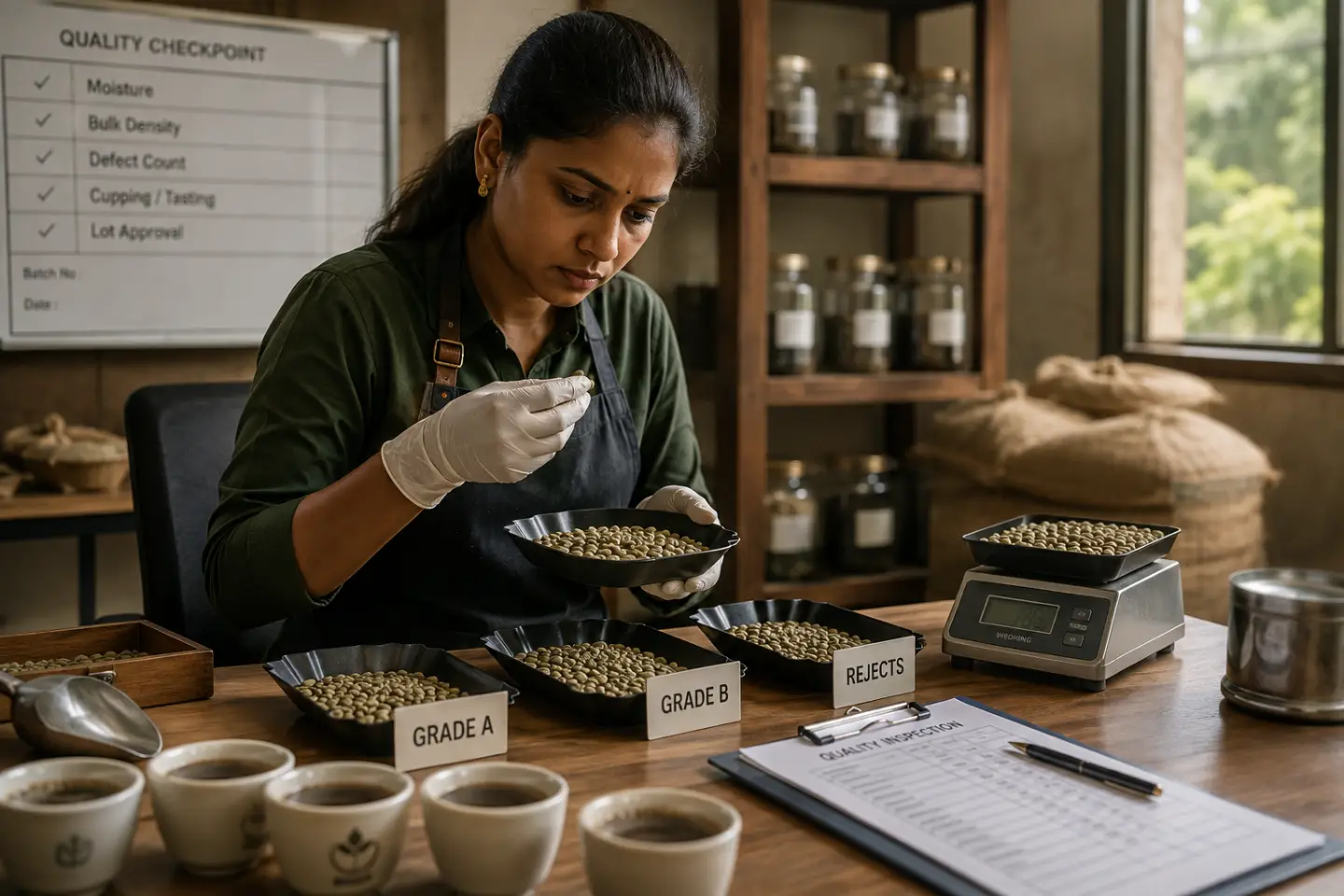
Sorting
Floated in water, screened by size, then hand-picked across a table. Defects are removed before processing rather than blended away after it. A single sour bean will carry through a whole roast, and one insect-bored peppercorn is enough to argue about with a buyer.
-
09
Drying
Sun on the yard, spread thin, turned by hand through the day and covered before the evening mist comes up the valley. Eleven percent moisture, checked with a meter and confirmed by the sound it makes when a handful is dropped. Cardamom is the one exception — it is cured in a room, not on the yard.
-
10
Storage
Breathable sacks, off the floor, off the wall, in a dark and dry store — never commingled between blocks or seasons. It is the least photogenic room on the estate and it is where a good harvest is most easily lost.
-
11
Quality inspection
Moisture, bulk density, defect count, and a cupping or a tasting before anything is released. If it does not pass, it does not get renamed and sold quietly — it stays on the estate. That has happened, and it will happen again.
The four rules underneath all eleven
We work in estate time.
What we will not say
Claims register · reviewed each season
If we cannot show the paper, we do not print the sentence.
Plenty of farms describe themselves in language nobody audits. One false claim can undo four generations of standing and close an export door permanently, so we hold ourselves to three tiers and stay inside them.
Tier 01
Said freely
Every line here sits behind a record we hold and will show you on request.
-
“Grown on our own estate.”
Survey numbers and land records, in our name since 1956.
-
“Shade-grown, hand-picked.”
Block-wise picking log. Three to four dated passes a season.
-
“Rainforest Alliance certified.”
Certificate shared with any buyer who asks.
-
“Estate-processed, harvest-stamped.”
Harvest register: block, picking date, pulping time.
-
“FSSAI licensed.”
Licence number printed on every pack that leaves the gate.
Tier 02
Said with care
Described as a practice, never certified as one. Each use needs a named document behind it first.
-
“Soil-first, pesticide-conscious.”
A practice, not a certification. Soil test file on request.
-
“Grown high, tastes different.”
Framed as taste, never as a test result.
Tier 03
Never said
No exceptions and no seasonal flexibility. Anything disparaging a named competitor sits here too.
-
“Organic certified.”
We hold no organic certificate. So it is never printed.
-
“Chemical-free.”
An absolute nobody can audit. Never printed.
-
“Good for your health.”
Medical and curative claims. Never printed, in any market.