Four conditions
What the mountain does before we do anything.
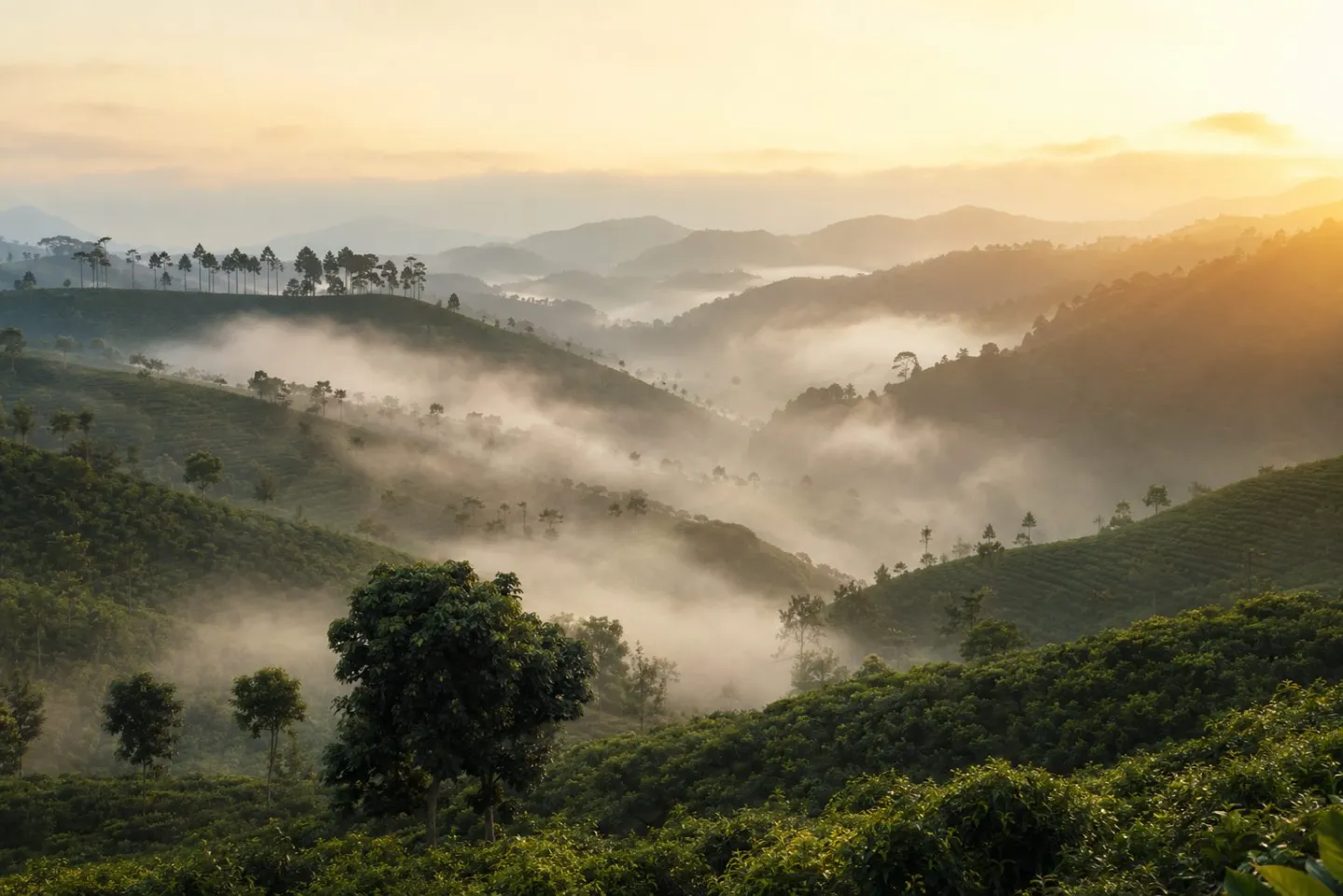
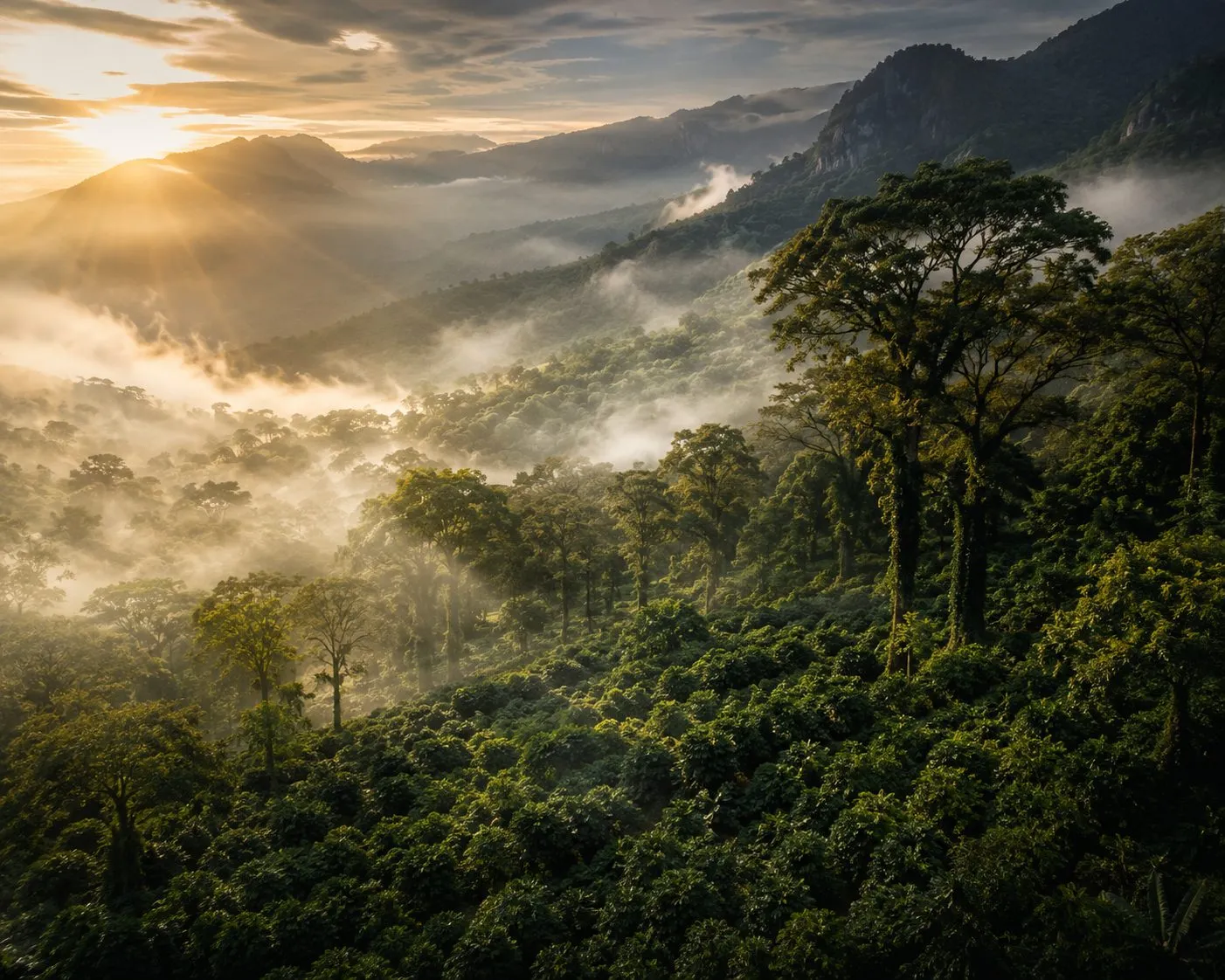
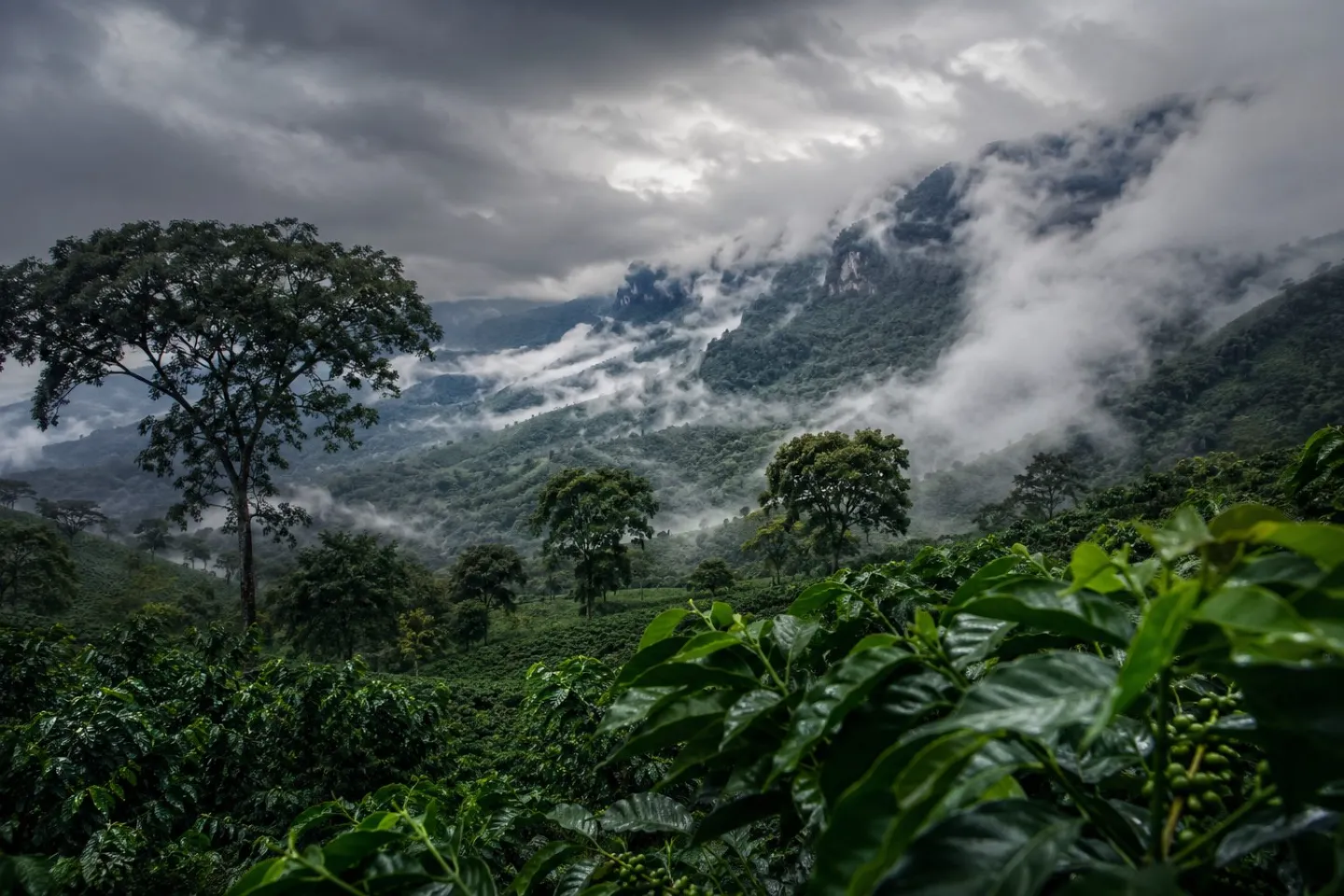
Terroir is not a flourish on a label. It is four measurable conditions that a flatland farm cannot buy, borrow or engineer — and all four are the reason this estate exists where it does.
-
01
~4,500 ft
Altitude
Cool nights slow the cherry down. The fruit takes months longer to ripen than the same seed would on the plains, and puts more sugar into the bean before it is picked.
-
02
4 months
Monsoon mist
The south-west monsoon parks on the range from June. Leaf stays wet, soil stays cool, and the pepper spikes lengthen on the vines through the whole of it.
-
03
Native
Shade canopy
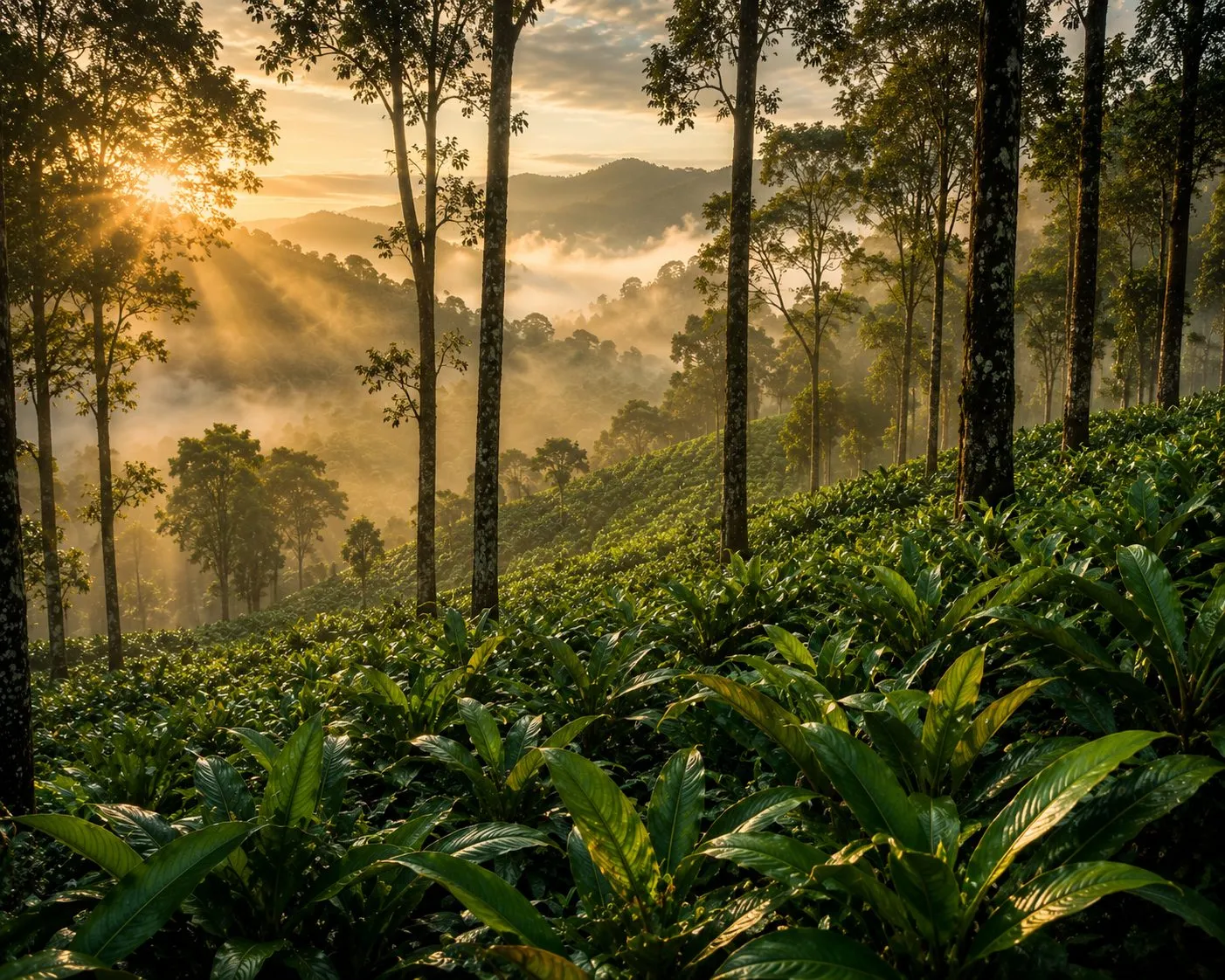
Silver oak and indigenous trees hold a roof over every row. Less heat stress, more leaf litter, and birds that keep the borer population honest.
-
04
Forest
Soil
Decades of leaf fall and returned pulp on granite-derived hill soil. Deep, dark and free-draining — built rather than bought.
Estate coffee
One species, grown in the dark.
Arabica, and only Arabica, on every acre of the hill. Most of this coast runs out of altitude and plants down to what will tolerate the heat. Ours does not run out. The range is tall enough that the same seed finds a cold aspect and a warm one without anyone leaving the estate to look for either.
What the mountain contributes is time. Cold nights, four months under cloud and a standing roof of shade all pull in the same direction: slower, and therefore denser. Everything the mill and the roastery do afterwards is an attempt not to waste that.
-
{{ c.name }}
{{ c.body }}
Estate spices
The other half of the canopy.
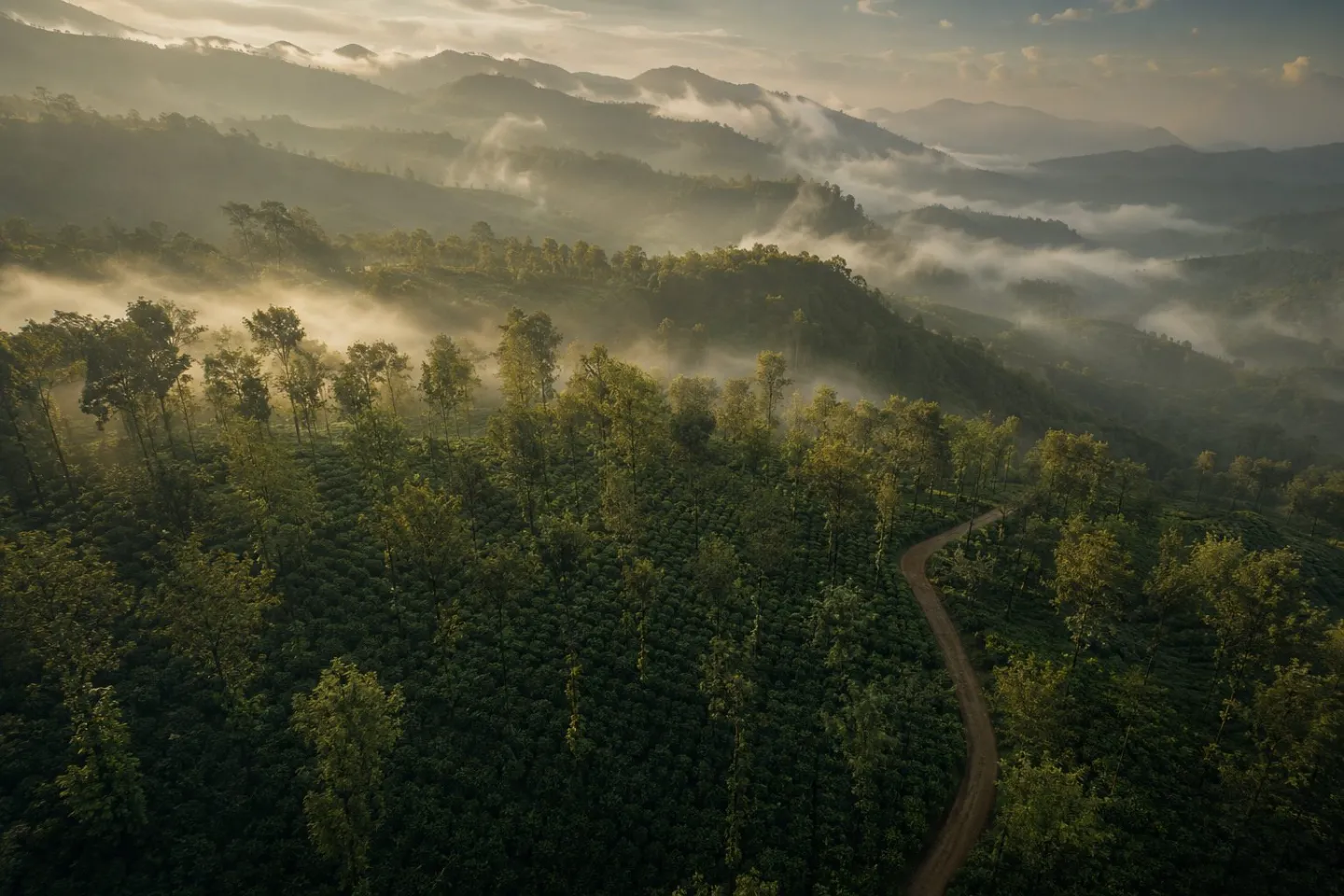
Coffee’s single-origin wave has barely reached the spice rack. Single-estate pepper and cardamom are still nearly unclaimed in Indian retail — and they have been growing here, between the coffee rows, for decades.
{{ season }}


{{ b.storey }}
{{ b.name }}
{{ b.latin }}
{{ b.body }}
- Picked
- {{ b.window }}
- Grown at
- {{ b.where }}
What else lives here
A working farm that is also a forest.
Leaving the canopy standing is a farming decision before it is an ecological one. The trees hold the soil, break the monsoon, and house the birds that keep the borer population down — and in return the hill keeps most of what was here before the first planting.
- {{ t }}