The origin
A first planting, and everything that grew from it.
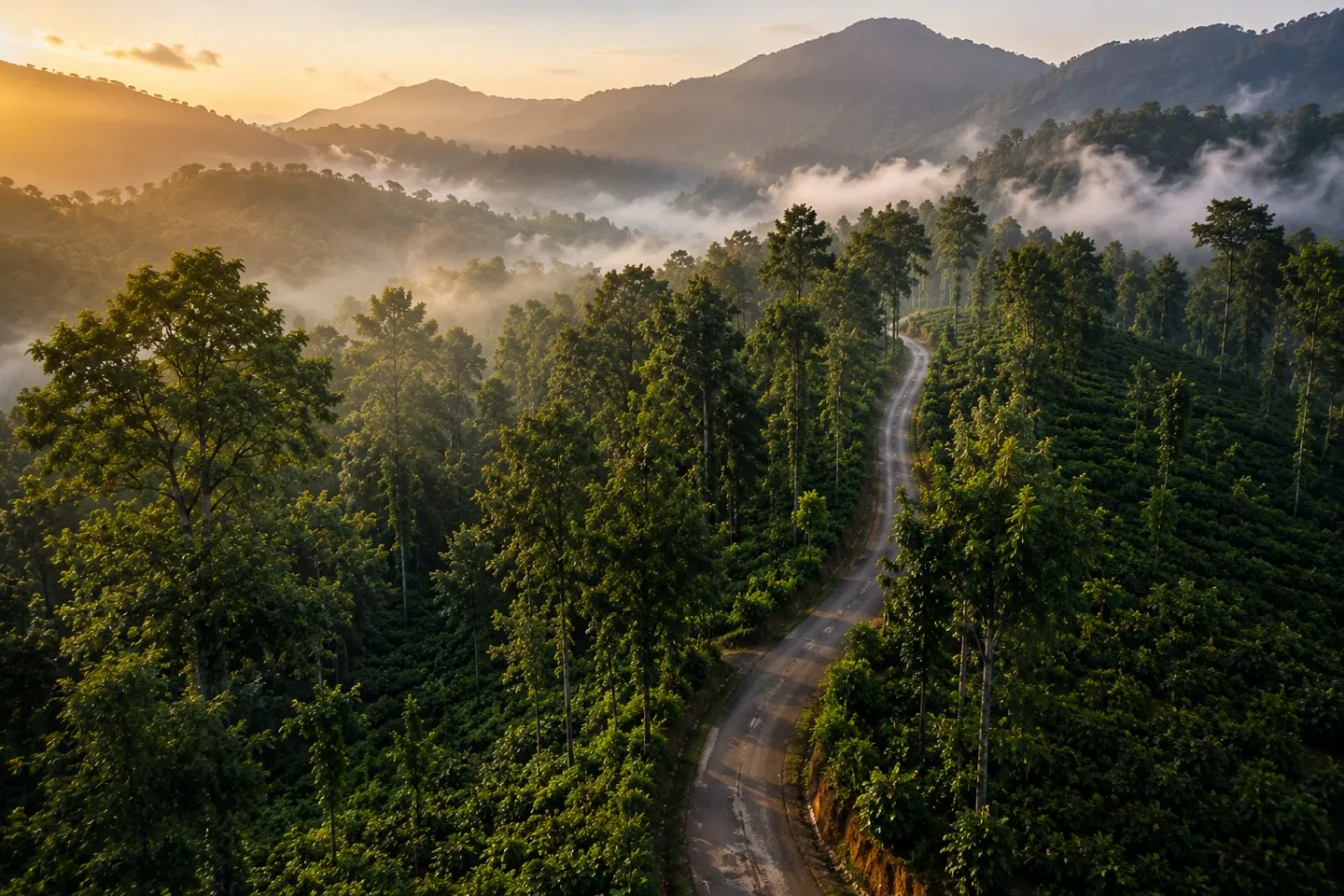
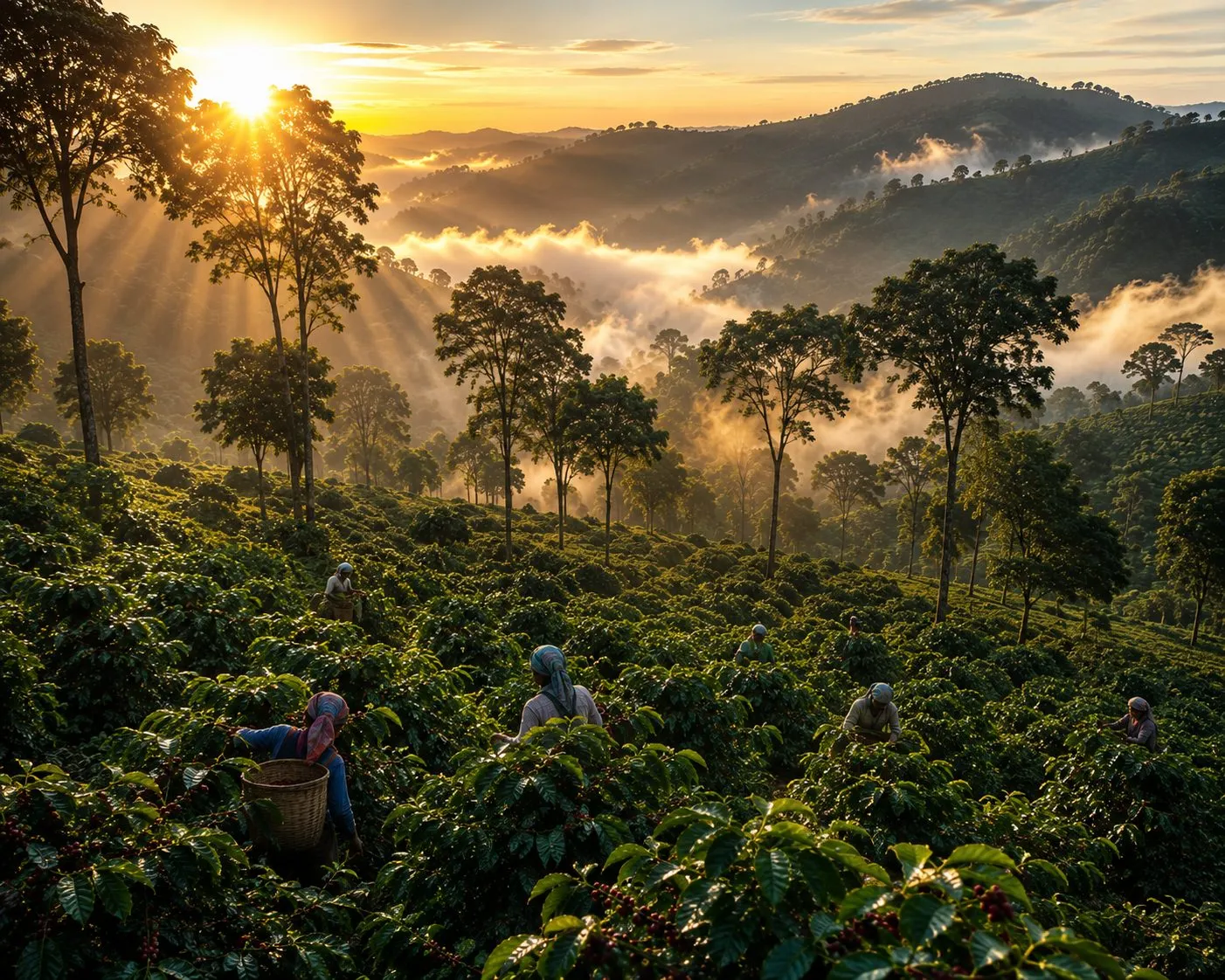
In 1956 a European planter had a passage booked and a plantation he could not take with him. Our family signed for it in a district office in Salem, walked the slope until they knew where the water ran, and then did the unglamorous thing: stayed. The hands that tend it now are the fourth generation, and they still walk the land daily.
Everything that followed — pepper on the silver oaks, cardamom in the deep shade, certification, a name on a pouch — followed from that one decision to farm slowly and stay put.
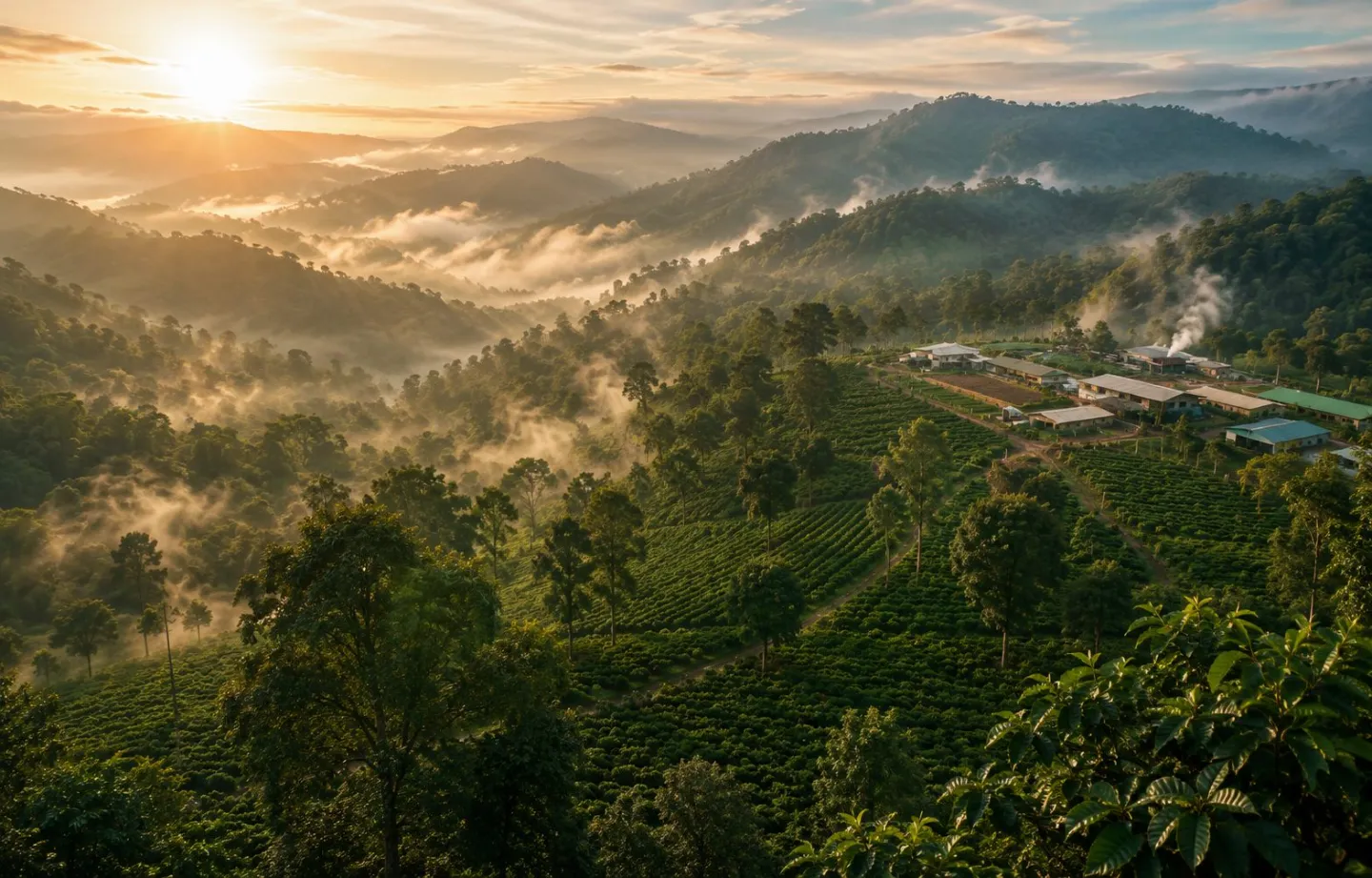
The estate at first light — the yards, the bungalow and the slope the family has farmed ever since.
The timeline
Seven decades, told in order.
-
{{ t.when }}
{{ t.title }}
{{ t.body }}
The holding
Non-contiguous mountainside.
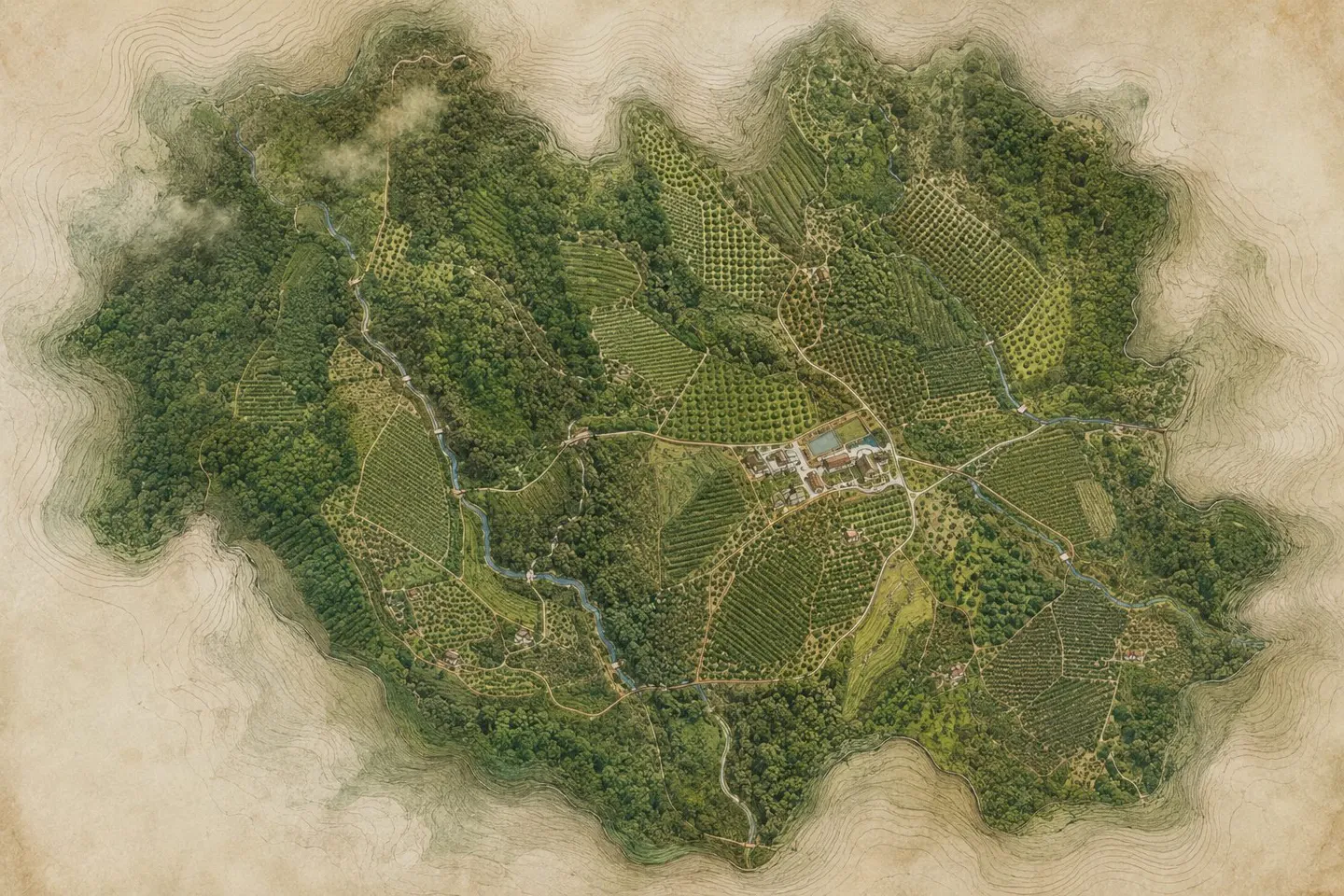
Twelve hundred acres, drawn from the estate’s own survey. Coffee blocks under shade, pepper on the tree lines, cardamom in the wet shade of the folds, and the drying yards and mill at the centre where the road reaches them.
- {{ m.k }}
- {{ m.v }}
Everything happens here
Nothing leaves the estate half-finished.
Picking, milling, drying, grading and packing all happen inside our own fences. Nothing is trucked to a third-party mill and trucked back with a different name on it — which is why the harvest month on the pouch means something.
The keepers
Counted in harvests, not years.
Tenure here is not nostalgia; it is practice, and the practice clocks in every morning. These are the people who decide when a block is ready — and they are the ones who will walk you through it.
-
{{ k.role }}
{{ k.tenure }}
{{ k.body }}
Names and portraits are published with written consent. Everyone photographed on this estate is a working keeper — there are no models here.
What we hold to