Estate Coffee | 100% Shade-Grown Arabica from Yercaud, Shevaroy Hills
Freshly roasted Cliff's estate coffee beans in macro, still warm from the drum roaster

What we grow · 01 of 02

Estate Coffee grown in the dark.

One species, planted a few hundred feet apart on the same slope and picked six weeks apart under a canopy of silver oak. Hand-picked between November and January, milled within hours of picking, and dried on the yard the family has swept since 1956.

Washed process

Picked Nov – Jan

Milled within 3 – 15 hours

Rainforest Alliance certified

What the coffee is

Cliff’s Estate Coffee is 100% shade-grown Arabica from a single family-kept holding at roughly 4,500 feet in the Shevaroy Hills above Yercaud, Tamil Nadu. It is hand-picked ripe, washed-processed and sun-dried on the estate, then roasted in small batches to a South Indian filter profile.

One species, two aspects

The same seed, six weeks apart on the same hill.

Every block on this hill is Arabica and always has been. What separates them is a five-hundred-foot fall between the top gate and the lower shoulder — enough that the same Arabica ripens at two different speeds, cups two different ways, and is picked in two different months. Most houses buy that contrast in. We walk down to it.

Aspect 01

Arabica

Coffea arabica · where the mist sits

Planted in the coolest, most shaded ground on the holding, where night temperatures drop hardest. It ripens slowest, yields least and rewards the patience with a sweeter, more aromatic cup. Fussier about everything — shade, drainage, and being picked at exactly the right red.

Blocks
Upper · ~4,200–4,500 ft
In the cup
Citrus peel, cocoa, a soft acidity
Picked
December – January

Aspect 02

The lower shoulder

Coffea arabica · the warm shoulder

The mist burns off here by nine and the nights are two degrees warmer, so the cherry fills faster and comes off the branch first. Heavier-cropping, broader in the cup, and the part of the harvest that gives a decoction the weight to hold its own against hot milk instead of disappearing into it.

Blocks
Lower · ~4,000–4,200 ft
In the cup
Dark chocolate, cereal, long finish
Picked
November – December

Why altitude changes the bean

Cold nights make the plant stop. So the bean takes longer.

A coffee plant only fills its seed while it is warm. Up here the air turns cold after dark, so the plant pauses for the night and starts again at sunrise. On the plains it never pauses. Ours ripens in nine months instead of six — and the extra three months are what put sugar and weight into the bean. Altitude sets the pace inside the estate too: eight months on the branch at 3,500 ft, nine at 4,500.

Read the mountain in full

Flower to ripe cherry Same plant, two altitudes
  1. Warm day — the bean fills
  2. Cold night — it stops
  3. Nine months, not six

The estate ridge

9months to ripen

Down on the plains

6months to ripen

Three extra months on the branch is where the sugar and the density come from.

9MONTHS
Blossom to ripe cherry
3PASSES
Hand-picked, per block
11% MOISTURE
Off the drying yard
3–15HOURS
Picking to pulping

Processing · eight steps, one address

Cherry to grind, without leaving the estate.

Most estates sell cherry at the gate and lose the story there. Every step below happens inside our fences, which is why nothing about it has to be taken on somebody else’s word.

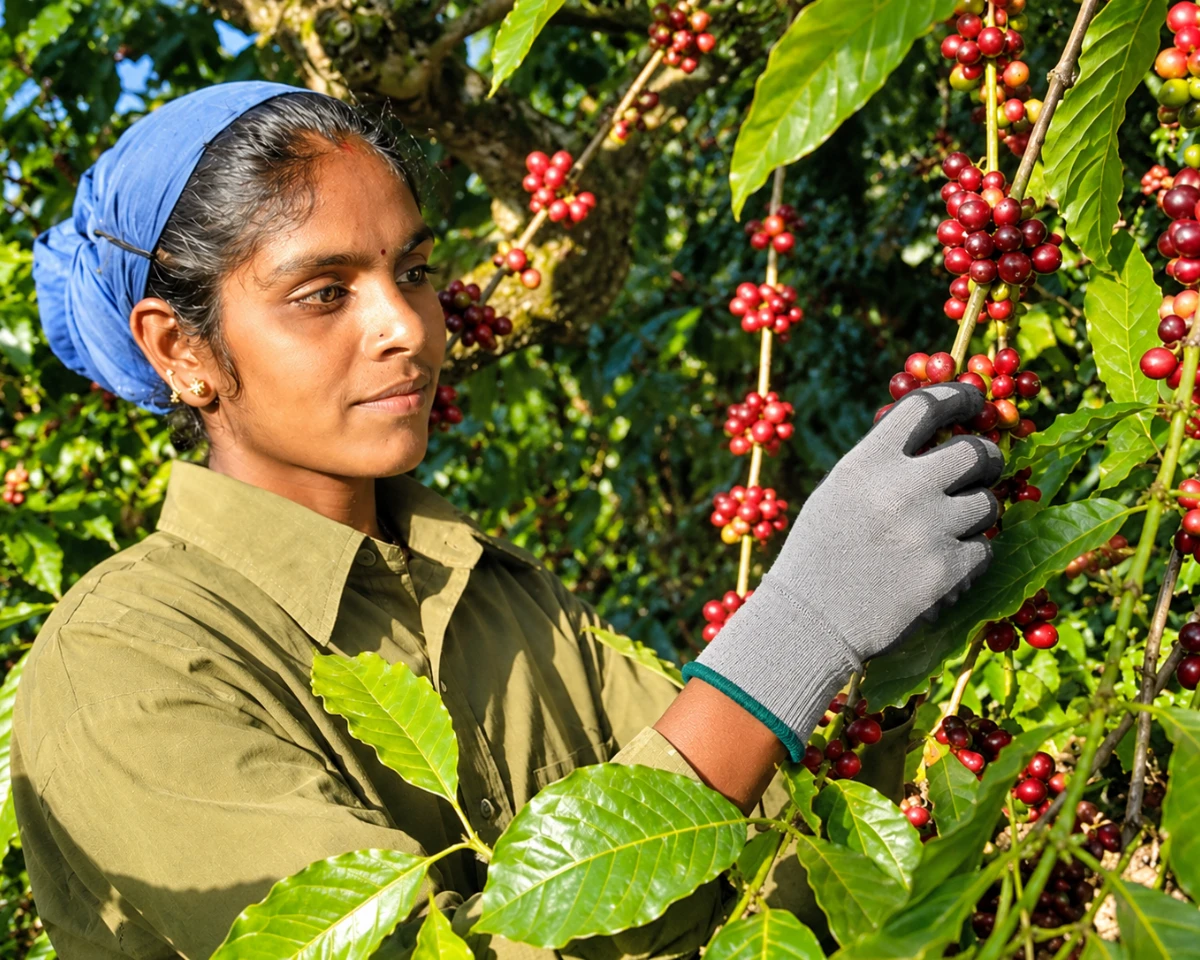
  1. Pickers hand-harvesting ripe red coffee cherries in the estate rows

    01

    Harvesting

    Only ripe red cherry, November to January. Three passes a season; a fourth would take everything, ripe or not.

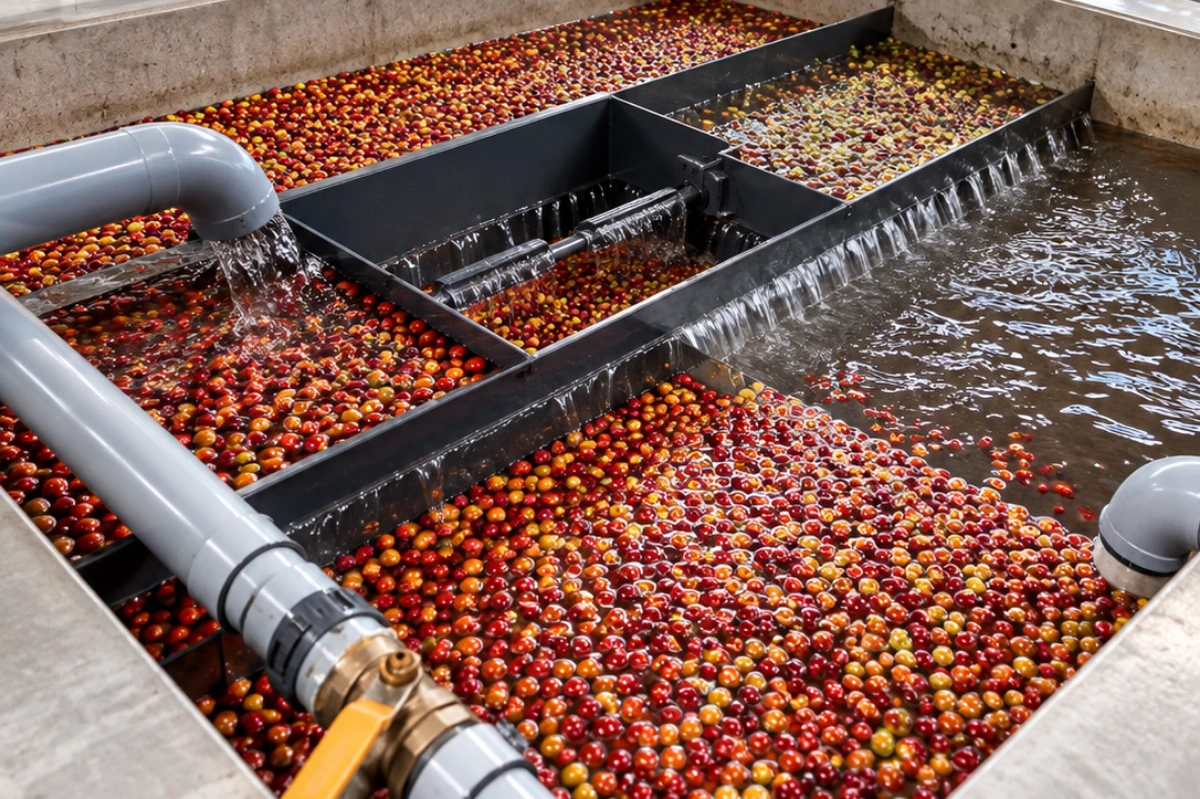
  2. Coffee cherries being floated and sorted in water tanks at the estate wet mill

    02

    Sorting & floating

    The day’s pick goes into water. Whatever floats is hollow, under-ripe or bored through, and it never reaches the pulper.

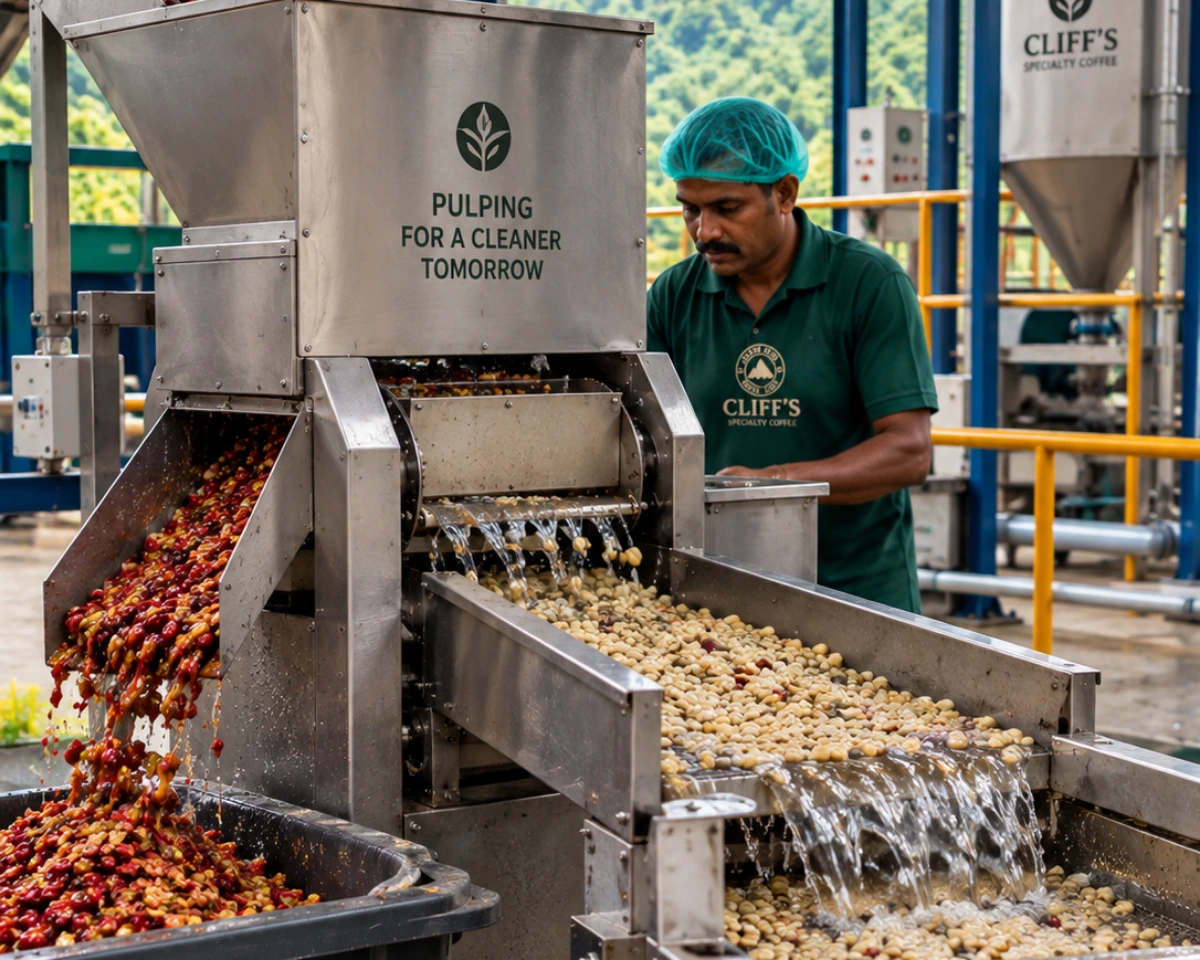
  3. The estate's vertical pulpers stripping skin and pulp from the day's coffee cherries

    03

    Pulping

    Skin and pulp come off three to fifteen hours after picking, on vertical pulpers. The pulp goes back to the compost yard.

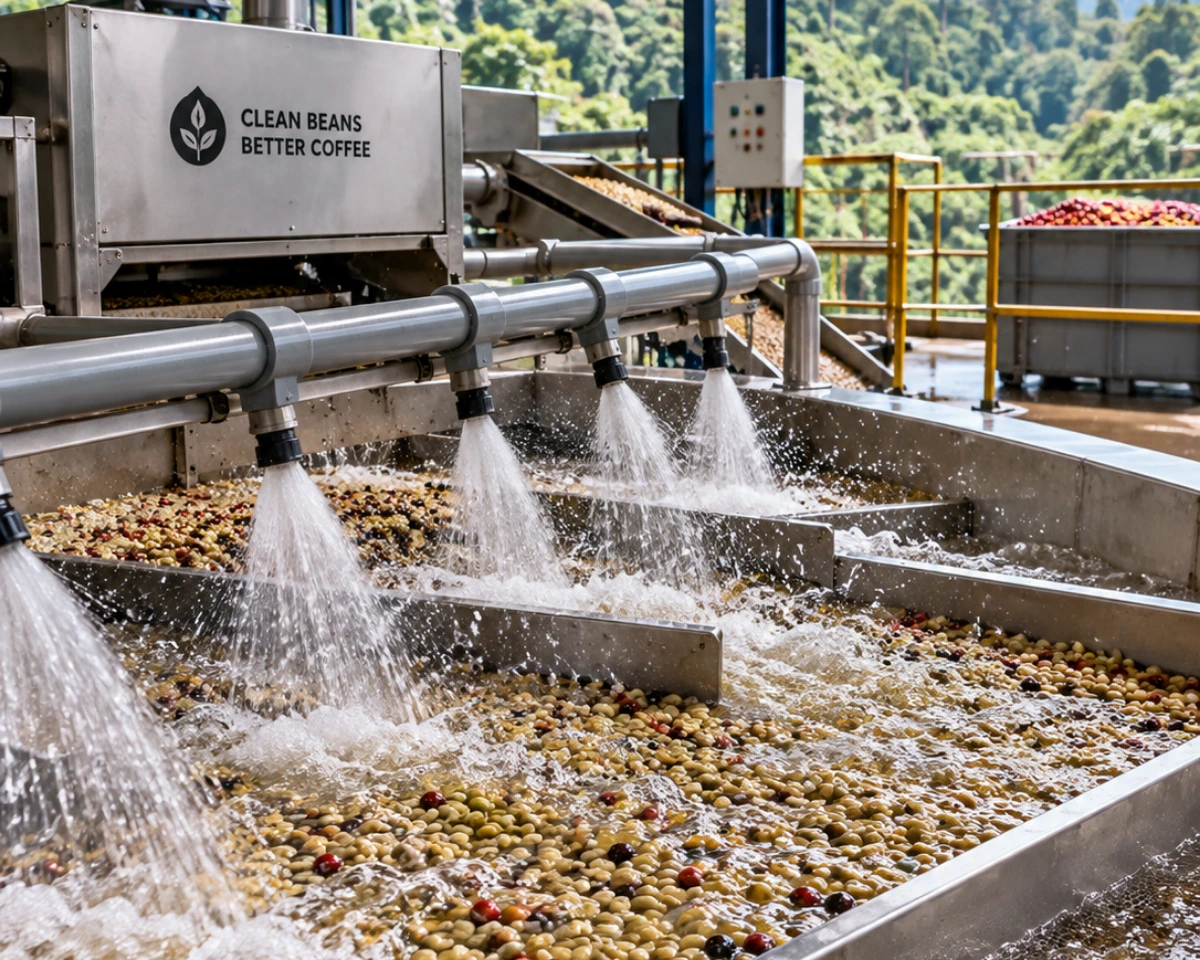
  4. Water jets spraying into the estate aqua-washing channels to strip mucilage from the beans

    04

    Aqua washing

    Water jets are sprayed into the beans at high speed, and the sticky substance on the seeds is removed until it is pebble clean.

  5. Coffee spread thin across the estate drying yard and raked by hand in the sun

    05

    Sun drying

    Spread thin on the yard and turned by hand through the day, covered before the evening mist, until moisture reads eleven percent. No mechanical dryers.

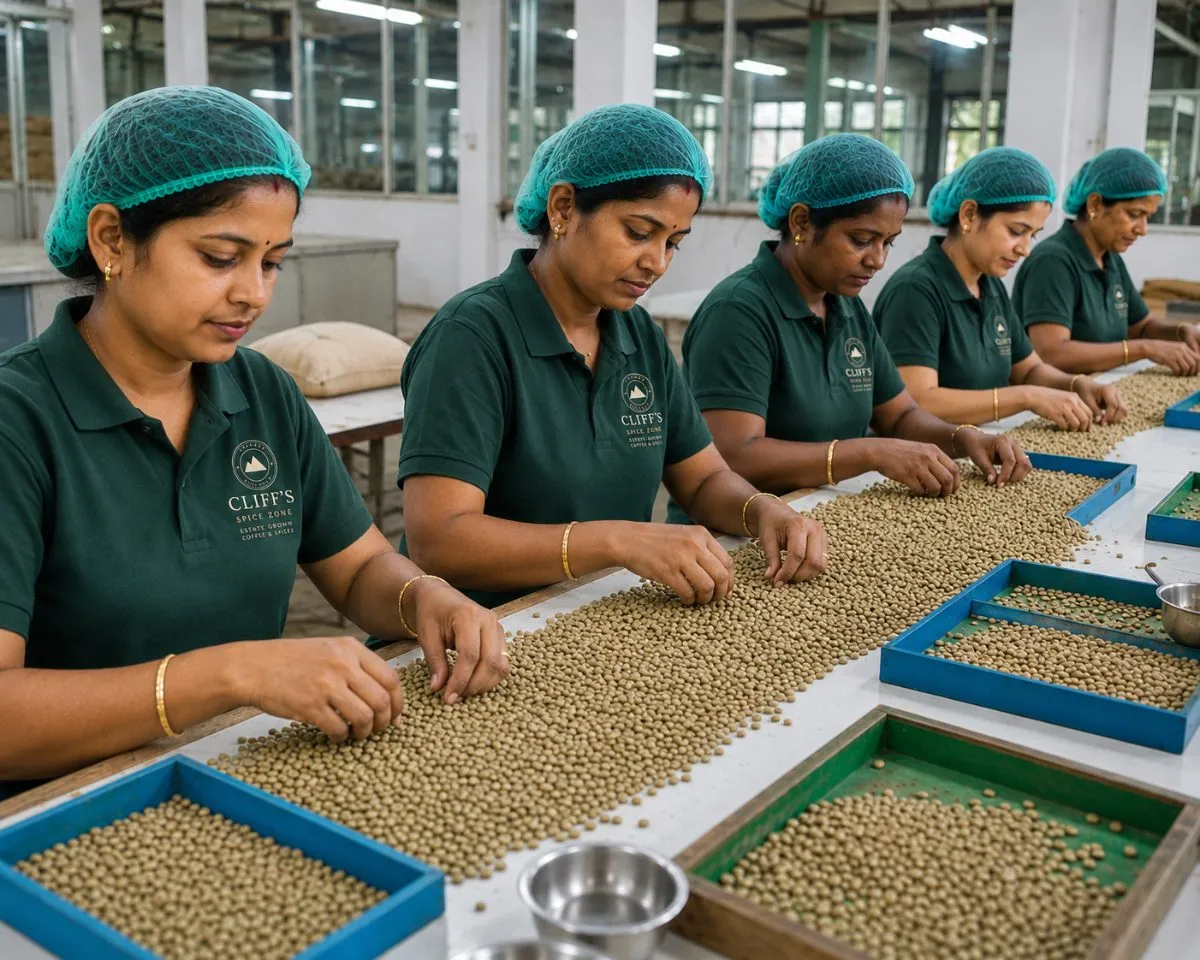
  6. Green estate coffee being screen-graded and hand-sorted for defects

    06

    Grading & sorting

    Screened by size, then hand-picked across the sorting table for defects. Only clean, even coffee goes into store.

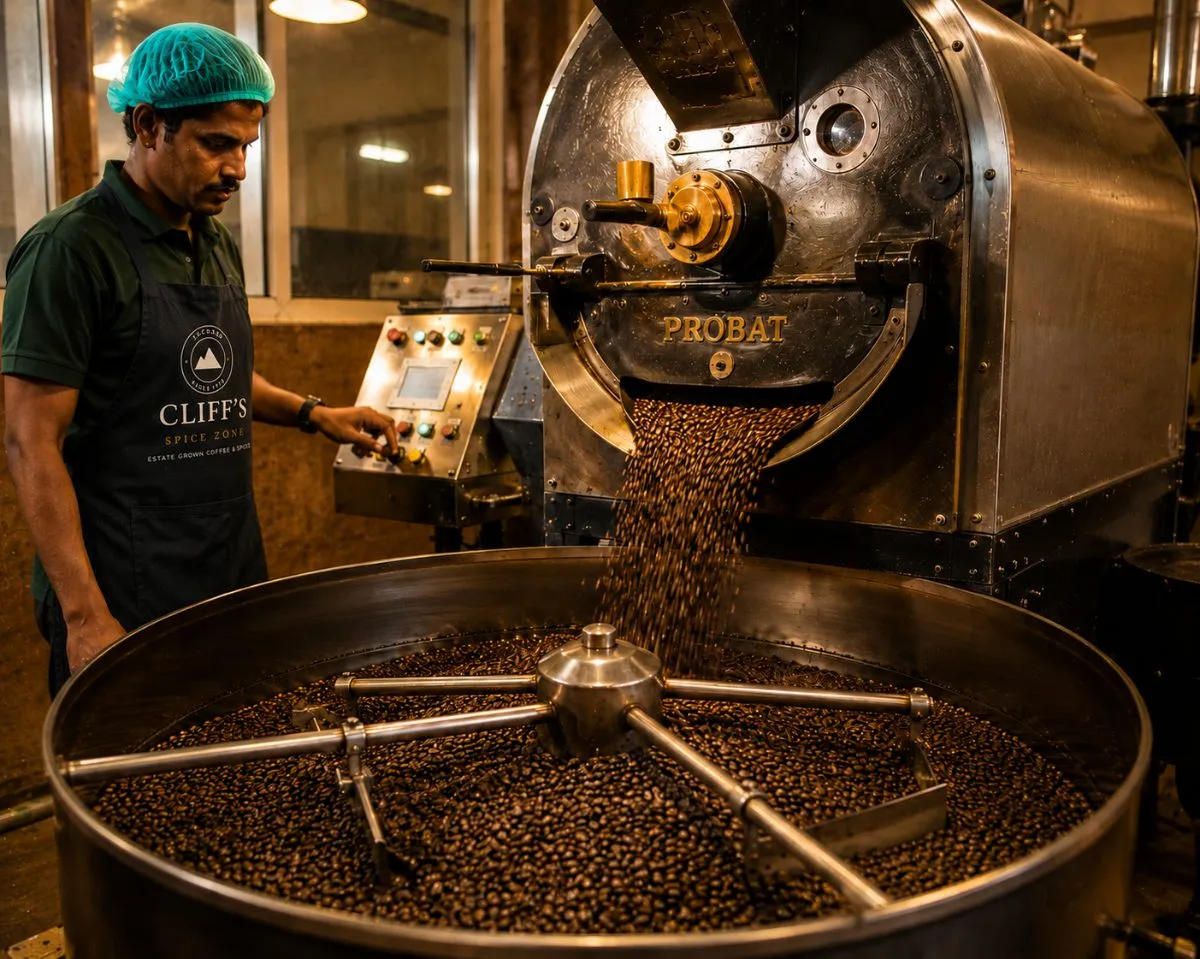
  7. Estate coffee turning in a small drum roaster to a South Indian filter profile

    07

    Roasting

    Small batches to a South Indian filter profile — medium-dark, fully developed, dry to the touch. Oil on the bean means we went too far.

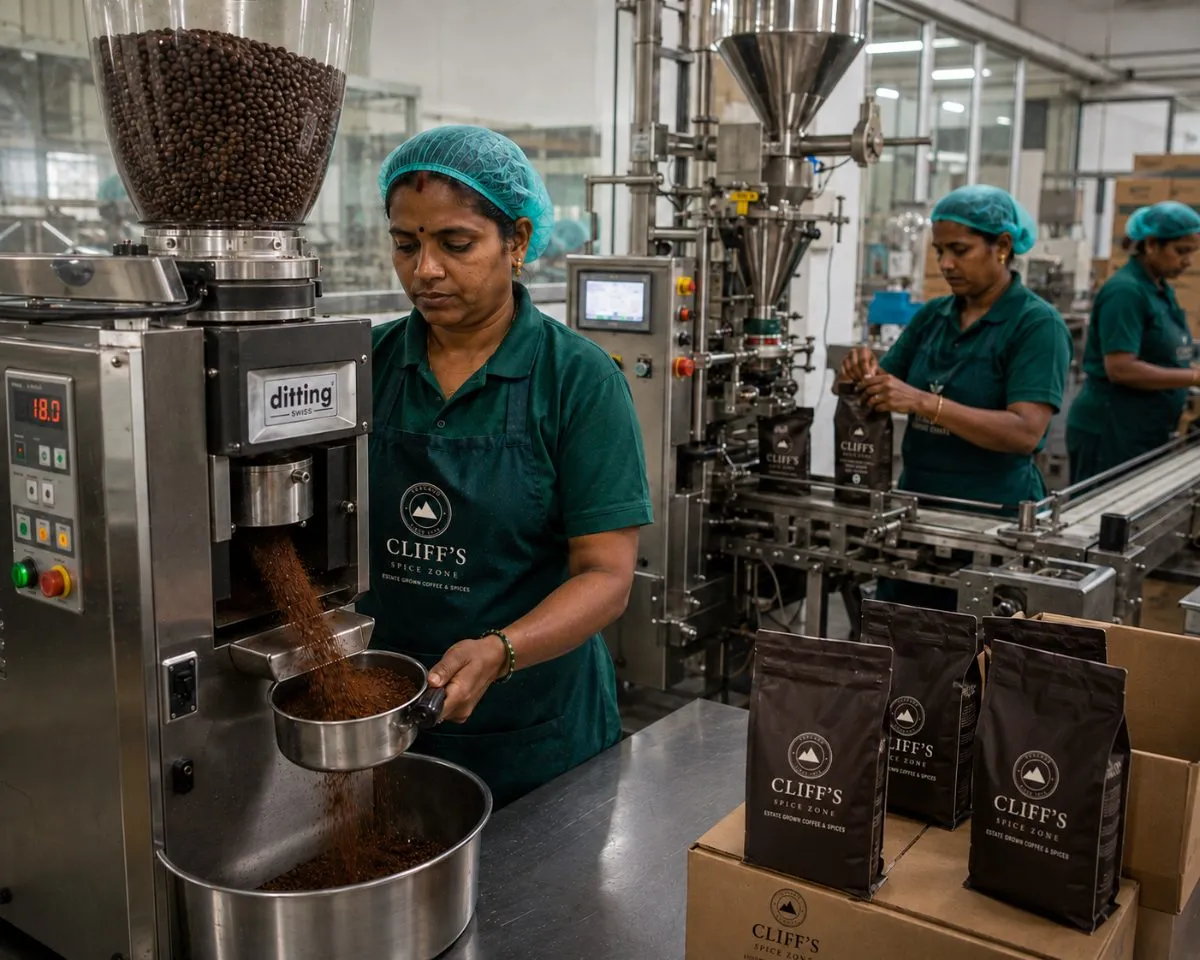
  8. Freshly ground estate coffee being weighed into kraft pouches and stamped

    08

    Grinding & packing

    Ground to order and weighed, with the roast date and grind stamped on the footer before the pouch is sealed.

Eight steps

Freshly ground Cliff's estate filter coffee in a brass measure on a worn teak surface

Roasting philosophy

We roast for the tumbler, not the tasting flight.

A South Indian decoction meets hot milk and sugar, and a light Nordic roast simply vanishes into it. So we take the bean further — through first crack, well into development, and out before the oils break the surface. The result is a coffee that still tastes like itself at the bottom of a steel tumbler.

  • Filter Classic Medium-dark · lower and upper blocks married · chicory optional
  • Single Estate Arabica Medium · one block, one picking day · cupped before release
  • Peaberry Medium · screened round beans · small, seasonal, rarely repeated

Brewing culture

The decoction is not a recipe. It is a household habit.

Every kitchen in these hills sets the filter at night and pours in the morning. Here is how it is done on the estate — and two other ways the same coffee behaves well, for anyone who has moved away from a brass dabara.

Filter coffee decoction being poured between a brass dabara and tumbler in an estate kitchen

South Indian filter

Medium-fine · 8–12 min drip

Two heaped spoons in the upper chamber, tamped lightly — never packed. Water just off the boil, lid on, and left alone. The decoction should fall as a slow, unbroken thread. Three parts hot milk to one part decoction, sugar to taste, pulled between dabara and tumbler until it foams.

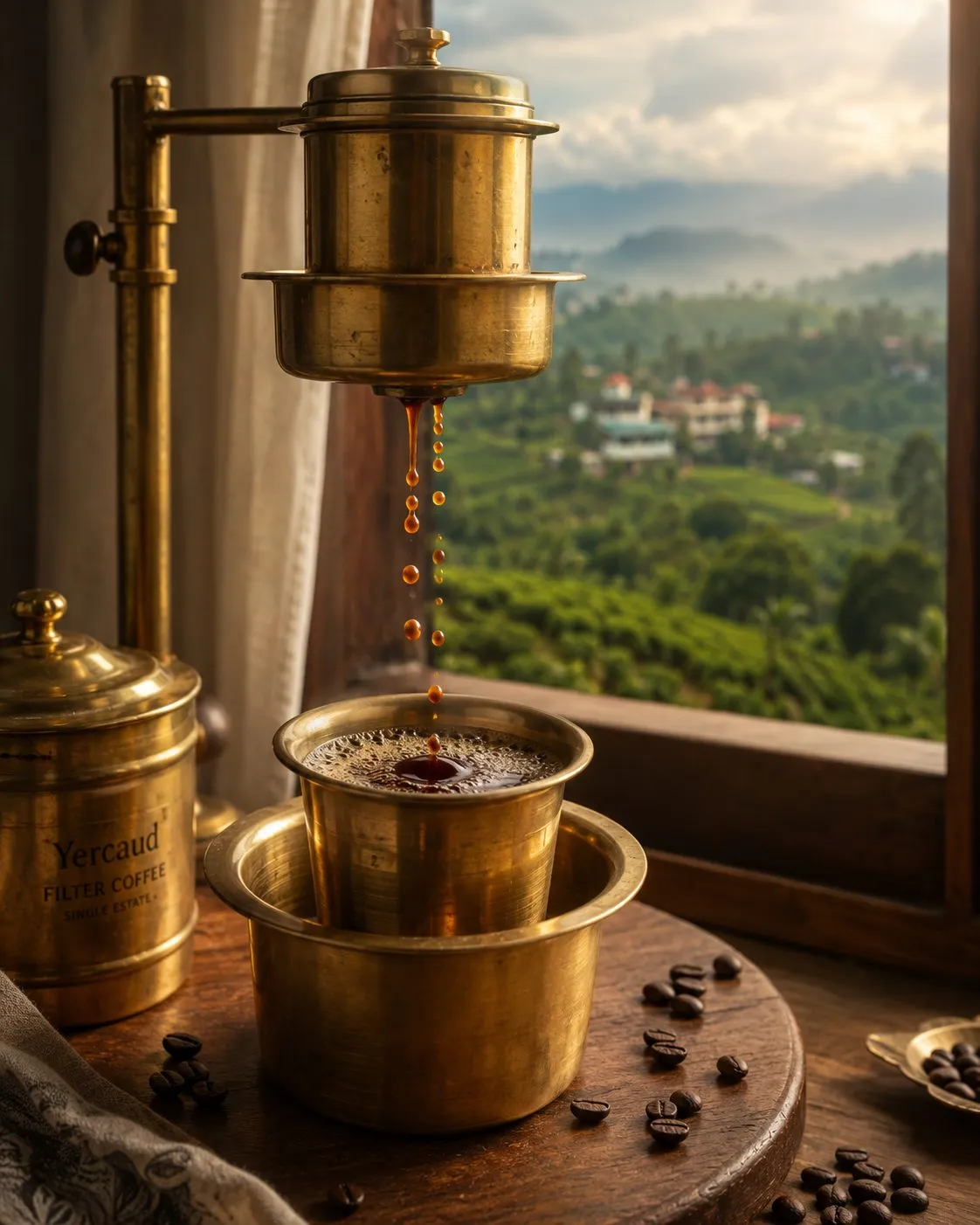
A brass pour-over dripper brewing beside a window that opens onto the estate slope

Pour-over

Medium · 1:16 · 3 min

Use the Single Estate Arabica here rather than the filter blend — the roast is lighter and the cup has somewhere to go. Bloom forty seconds at double the dose in water, then pour in three even additions. Cocoa and citrus peel arrive as it cools.

Ground estate coffee beside whole roasted beans on a dark surface

Moka & press

Coarse to fine · 4 min

The Filter Classic takes to a moka pot without complaint — the lower-block coffee gives it the crema. In a press, go coarse and stop at four minutes; any longer and the roast turns from chocolate towards ash.

The coffee year

Twelve months, four jobs, one crop.

The year does not start in January. It starts when the rain does, and every job below is dated from there. Two of them overlap, which is why February is the busiest month nobody photographs.

FMAMJJASONDJ
  1. Feb – Mar

    Pruning & first roasts

    Two months

    The bushes are cut back, the compost turned, and the season’s first roasted coffee leaves the estate. Cupping happens now, before anything is offered.

  2. Mar – May

    Blossom

    Three months · overlaps pruning

    The first rain opens the estate white overnight and the whole slope smells of jasmine for about four days. Everything the December harvest will be is decided in that week.

  3. Jun – Sep

    Filling

    Four months · the longest job

    Under four months of monsoon cloud the cherry swells and hardens. Weeding, shade-lopping and drain-clearing — the unphotogenic work that the harvest depends on.

  4. Nov – Jan

    Picking

    Three months · walked repeatedly

    The lower shoulder comes off first, the upper blocks follow six weeks later. Every block is walked several times so only red cherry leaves the branch. The mill runs each afternoon and the yard is full by dawn.

Bar length is duration. October is the only month with nothing to do but wait, and the estate spends it clearing drains.

Questions we get asked

About the coffee itself.

{{ f.a }}

From here

Come and taste it where it grew.

The Tasting Table pours the same three coffees described on this page, beside the yard they dried on. Or read how the spices are grown in the shade between these rows.

A Cliff's Spice Zone pouch with a brass dabara and tumbler among ripening coffee cherries and pepper vines on the estate

The estate pour — decoction, brass, and the rows it came off.